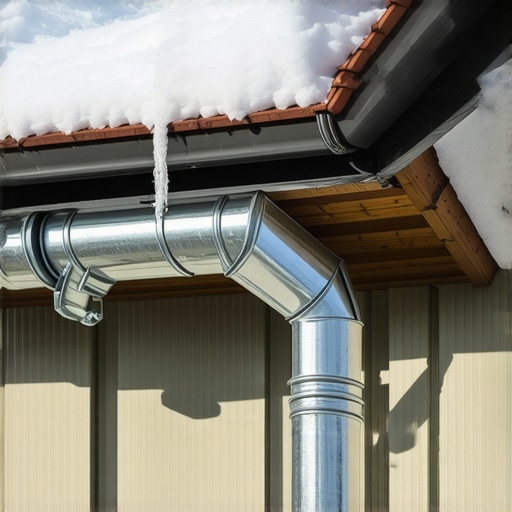
The High Cost of Winter Neglect
I remember a call I took back in the winter of 2014 in a suburb of Chicago. The homeowner was frantic because his entire north-facing gutter run, about forty feet of heavy-gauge aluminum, had literally peeled away from the house like a banana skin. He thought it was just the weight of the snow. When I climbed the ladder, I saw the real culprit. The installer had used plastic spikes that had long ago worked their way out of the fascia board. As the meltwater from the roof hit the frozen gutter, it created a solid block of ice weighing nearly four hundred pounds. That kind of weight does not just sit there; it creates a mechanical lever that rips the wood right off the rafters. If you think gutter winterization is just about blowing out a few leaves, you are setting yourself up for a foundation-cracking surprise come the 2026 thaw.
The Physics of the Frozen Leader
Water is a destructive force, especially when it transitions from liquid to solid. When we talk about ice dam prevention, we are really talking about thermal management. Heat escaping through your soffit warms the roof deck, melting the bottom layer of snow. That water runs down to the cold gutter, which is hanging out in the sub-freezing air. It freezes instantly. This process repeats until you have a mountain of ice pushing water back up under your shingles. This is why vacuum gutter extraction is non-negotiable. Traditional hand-cleaning often leaves a fine layer of organic sludge. That sludge acts as a sponge, holding moisture that kicks off the freezing cycle much faster than a clean, dry metal surface would.
“Downspouts shall be sized based on the rainfall intensity of the region and the roof surface area.” – International Plumbing Code, Section 1106
Step 1: Industrial Grade Vacuum Gutter Extraction
Forget the leaf blower. To properly prep for a hard freeze, you need vacuum gutter extraction. This method removes the microscopic silt that clogs the pores of your aluminum or copper. When that silt freezes, it creates a textured surface that ice can grip onto. A smooth, clean gutter allows the initial meltwater to slide directly to the leader without catching. If you have industrial gutter services performed, they will ensure the entire system is stripped down to the metal, preventing the ‘slush-plug’ that usually starts at the elbow.
Step 2: The Pitch and Slope Audit
If your gutters have even a slight dip, you are in trouble. I demand a pitch of at least one-quarter inch for every ten feet of run. In the summer, a small puddle in your gutter just breeds mosquitoes. In the winter, that same puddle becomes a localized glacier. We use a digital level to check the slope. If the hangers have sagged, the water will pool, freeze, and expand, leading to a necessary gutter leak repair in the spring. You want the water moving at a high velocity so it does not have time to crystallize before it hits the ground.
Step 3: Reinforcing with High-Wind Gutter Anchors
Standard spikes and ferrules are a joke in snow country. For a 2026-ready system, we install high-wind gutter anchors. These are heavy-duty screws that bite deep into the rafter tails, not just the thin fascia board. We space them every twelve inches in high-load areas. This structural reinforcement ensures that even if a minor ice dam forms, the weight will not cause the system to collapse. This is the difference between a maintenance-free gutter system and one that ends up in a scrap heap after a blizzard.
Step 4: Miter and End Cap Sealing
Cold weather makes materials contract. Your aluminum gutters will shrink slightly as the thermometer drops, which puts immense stress on every miter and end cap. We use a high-grade tri-polymer sealant that remains flexible down to minus forty degrees. If your seams are leaking now, they will burst when ice gets inside them. Gutter repair services often overlook these small joints, but a single leak can lead to water saturating your foundation, which then freezes and causes frost heave.
Step 5: Leader and Elbow Clearance
The elbow is the most vulnerable part of your drainage system. It is where the flow of water is forced to change direction, losing velocity. We check every elbow for internal obstructions. If you have membrane roof gutters, the debris can be even more problematic as the granules from the membrane often settle in the bends. We ensure that the transition from the horizontal run to the vertical leader is seamless and unobstructed.
“Gutters and downspouts shall be maintained in good repair and free from obstructions.” – SMACNA Architectural Sheet Metal Manual
Step 6: Soffit and Fascia Inspection
You cannot hang a heavy gutter on rotten wood. We inspect the fascia for signs of soft spots or dry rot. If the wood is compromised, the weight of winter ice will pull the fasteners out, regardless of how long they are. We also check the soffit vents. Proper attic ventilation is the secret weapon of ice dam prevention. If your attic stays cool, the snow on your roof stays frozen, and the water management system never has to deal with the freeze-thaw cycle in the first place.
Step 7: Professional Disposal and Sustainable Upgrades
If your system is beyond saving, do not just throw it in the woods. Eco-friendly gutter disposal ensures that old aluminum is recycled properly. When we upgrade a home for 2026, we often look at oversized leaders and specialized hangers that can handle the increased volatility of modern winter storms. High-flow systems are essential for preventing the overflow that leads to icicles hanging from your rafters, which is a clear sign of system failure.
Conclusion: Protecting the Foundation
At the end of the day, your gutters are the only thing standing between a dry basement and a flooded nightmare. When water is allowed to pour over the side of a frozen gutter, it lands right next to your foundation. In cold climates, that water freezes in the soil, expanding and putting thousands of pounds of pressure on your basement walls. By following these seven steps, you are not just cleaning a piece of metal; you are engineering a defense system that will keep your home’s skeleton dry and stable through the harshest winter months.