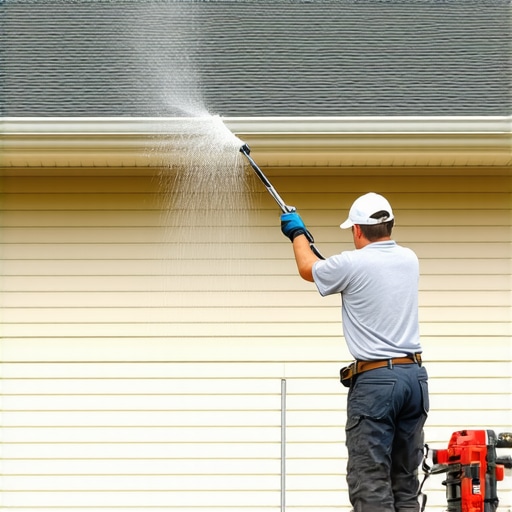
The High-Pressure Disaster: Why Your Maintenance Routine is Killing Your Home
I recently walked a property where the homeowner thought he was being proactive. He had a top-of-the-line pressure washer and a weekend to kill. By Sunday evening, his gutters were clean, but his brand-new siding looked like it had been through a mortar attack. I have spent twenty-five years in the trenches of the gutter industry, and I have seen more damage caused by well-intentioned cleaning than by actual storms. People treat water like it is just a cleaning agent, but when you put it under three thousand pounds per square inch of pressure, it becomes a liquid chisel. You aren’t just removing pine needles; you are often dismantling the very system designed to protect your foundation.
The Narrative of the Saturated Soffit
I remember a call-out to a beautiful custom build where the owner had just invested in a high-end gutter installation. He wanted everything pristine. He took a pressure washer to his built-in gutter systems, aiming the nozzle upward to get under the lip. What he didn’t realize was that he was overcoming the laws of physics. By forcing water at high velocity into the gap between the fascia and the soffit, he bypassed the drip edge entirely. Three weeks later, his interior ceiling was sagging. The water didn’t just disappear; it pooled on top of the soffit panels, soaked the insulation, and started a mold colony that cost five times more to remediate than the original gutter job. This is the reality of improper maintenance.
“Downspouts shall be sized based on the rainfall intensity of the region and the roof surface area.” – International Plumbing Code, Section 1106
The Physics of Failure: Hydro-Zooming into the Gutter Channel
When we talk about gutters, we are talking about a delicate balance of pitch and volume. A standard gutter is sloped at a quarter-inch per ten feet to ensure water moves toward the leader. When you introduce a pressure washer, you are introducing a volume of water that the end cap and miter joints were never designed to handle at once. Think about the surface tension. In a normal rain, water clings to the bottom of the shingle and drops into the center of the trough. When you blast it, you break that surface tension. The water atomizes, turning into a fine mist that can penetrate the smallest hairline cracks in your siding or the wood grain of your fascia board. This leads to premature rot that won’t show up for a year, but by 2026, that siding will be buckling and ready for the landfill.
Mistake 1: The Upward Blast and Soffit Intrusion
The most common error is the angle of attack. Homeowners stand on the ground and aim the wand upward. This is the exact opposite of how a house is built to shed water. Your shingles overlap to guide water down. Your siding overlaps to guide water down. By spraying upward, you are literally pushing water under the protective layers. You are saturating the sub-fascia and the rafters. If you have older industrial gutter services hardware or even a shed gutter systems setup, the seals are likely already brittle. High pressure will blow those seals out, turning a watertight system into a sieve.
Mistake 2: Ignoring the Miter and End Cap Integrity
Every corner of your gutter system has a miter joint, and every run ends with an end cap. These are held together by high-grade sealant. Pressure washers are designed to strip paint and grease. What do you think they do to silicone or thermoplastic sealants? I have seen people blow the sealant right out of the joint, leaving a gap that leaks every time it sprinkles. This water then drips directly onto the foundation, leading to the exact soil erosion we try to prevent with flexible downspout extensions. If you are dealing with bold color gutter trends, like matte black or copper-toned aluminum, that high-pressure stream can also strip the specialized coating, leaving you with ugly silver streaks that ruin the curb appeal.
“Gutters and downspouts should be maintained to ensure the free flow of water away from the building’s foundation.” – SMACNA Architectural Sheet Metal Manual
Mistake 3: The Sludge Bullet Effect
When you use a pressure washer to clear a clog, you aren’t removing the debris; you are compacting it. You are essentially creating a “sludge bullet” that gets jammed into the elbow of the downspout. Once that debris is packed tight by hydraulic pressure, no amount of rain will clear it. This is why we use camera scoping for gutters. I’ve scoped downspouts where the debris was so compressed it looked like a plug of solid earth. You have to mechanically remove the debris before you ever think about using water. If you don’t, you’ll find your gutters overflowing within the first ten minutes of the next thunderstorm because the leader is completely obstructed.
Mistake 4: Disregarding Material Health (Asbestos and Fragile Metals)
Not all gutters are created equal. If you are working on an older home, you might be dealing with asbestos gutter handling protocols. Believe it or not, some old cementitious gutters contained fibers that you absolutely do not want to aerosolize with a pressure washer. Even with modern aluminum, the hanger spacing might be too wide to support the weight of a gutter filled with water and the added force of a pressure stream. If the brackets are every thirty-six inches instead of every twelve or eighteen, you risk the whole run pulling away from the house under the physical load of the cleaning process.
Mistake 5: Neglecting the Drainage Exit Point
The job doesn’t end at the splash block. Many people blast their gutters clean only to realize they have pushed all that silt into their parapet drain systems or underground French drains. This creates a long-term drainage failure that can lead to basement flooding. In colder climates, this excess moisture in the lines can freeze, requiring gutter de-icing services to thaw out the mess you made in July. You must ensure the water is actually exiting the system, which often means checking the pop-up emitters or the end of the flexible downspout extensions to ensure they aren’t buried in mulch.
The Expert’s Verdict: A Controlled Flow
Maintenance is a necessity, but it must be done with respect for the engineering of the home. Use a ladder, use your hands, and use a garden hose with a low-pressure spray. Save the pressure washer for the driveway. If you really want to ensure your system is ready for 2026, invest in a proper inspection. We look at the pitch, the hanger integrity, and the condition of the fascia. Water is the most destructive force on earth; don’t give it a head start by blasting it into your walls with a machine. Your siding, your foundation, and your wallet will thank you when the big storms finally hit.
Reading this post really opened my eyes to how easily high-pressure washing can backfire if not done properly. I once saw a homeowner accidentally strip the protective finish off their gutters after a weekend cleaning with a pressure washer, and it was costly to fix. I appreciate the detailed explanation of how water under too much pressure can actually cause long-term damage, especially when it comes to delicate components like miter joints and seals. It’s a reminder that maintenance isn’t always about brute force but about respecting the engineering of our homes. I’ve personally found that using a garden hose with a spray nozzle on a low setting works wonderfully to loosen debris without risking damage. Has anyone here tried using specialized gutter cleaning tools or camera inspections to catch these issues early before resorting to water? Sharing practical tips on inspection and maintenance would be great for those of us looking to do this right.