The Gravity of Winter Water Management
I have spent over twenty-five years on ladders, and if there is one thing I have learned, it is that water is a patient assassin. It does not just sit in your gutters; it calculates how to get under your shingles and into your foundation. Back during the extreme freeze of 2021, I was called to a home where the owner had spent a fortune on high-end heat cables. He thought he was safe. Instead, I found a forty foot run of seamless aluminum that had twisted into a metal pretzel. Because he had ignored his hanger replacement services and used old spikes that had long ago loosened, the weight of the slush and the thermal expansion of the metal literally ripped the system off the house. It took the wood shake gutter flashing and two layers of soffit with it. That is what happens when you treat gutter maintenance like a hobby instead of engineering.
When we talk about heated gutter cables, we are talking about more than just a wire. We are talking about the physics of thermal transfer and the integrity of your drainage system. If you live in a region where the mercury stays below freezing for weeks, your gutters are under constant mechanical stress. As water freezes, it expands by approximately nine percent. Without a clear path for that meltwater to escape, that expansion happens inside your miter joints and behind your fascia board. This leads to rot that you will not see until your gutters start sagging like a wet cardboard box.
“Downspouts shall be sized based on the rainfall intensity of the region and the roof surface area.” – International Plumbing Code, Section 1106
Mistake 1: Ignoring Hanger Spacing and Structural Load
Most homeowners assume their gutters can hold the weight of a heavy ice load because they held up during a summer thunderstorm. That is a dangerous assumption. In winter, a gutter can easily hold hundreds of pounds of frozen debris. If your hanger replacement services were last performed a decade ago, those brackets are likely fatigued. For cold climates, we do not follow standard three foot spacing. I insist on heavy duty hangers every twelve inches. When you install heat cables, you are inviting meltwater to pool in specific areas before it drains. If the hangers are too far apart, the gutter will bow. This creates a low spot where water sits, freezes when the cable is off, and eventually pulls the hanger right out of the wood. Using a gutter machine forming process to create seamless runs is great, but those runs are only as strong as the hangers holding them to the house.
Mistake 2: Failing to Address the Leader and Downspout Path
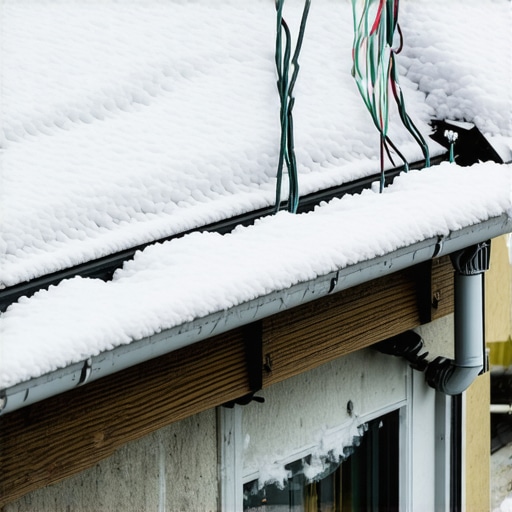
The biggest amateur move I see is a heat cable that stops at the top of the downspout. You have melted the ice in the gutter, but where is that water going? It hits the cold air in the leader and freezes instantly. You end up with a vertical pipe of solid ice that can burst the metal seams. Proper downspout installation for winter includes running the cable all the way down to the splash block or the underground exit point. You have to ensure that the entire path of the water is clear. If you have a reverse curve guards system, the cable needs to be routed specifically so it does not interfere with the surface tension that allows the water to follow the curve into the trough. If the cable is too far back, the water will just shoot over the edge and create an ice skating rink on your sidewalk.
Mistake 3: Poor Coping Cap Alignment and Flashing Gaps
On many modern homes, especially those with flat roof sections or parapets, coping cap alignment is critical for moisture control. If your heat cable causes snow to melt and that water finds a gap in the coping or the asphalt shingle gutter edge, it will travel by capillary action up and under the roof deck. I have seen wood shake gutter flashing that looked perfect from the ground but was completely detached behind the gutter. When the cable melts the snow, the water follows the path of least resistance. Often, that path is behind the fascia and into your attic. You must ensure that the drip edge is correctly tucked into the gutter so that meltwater has no choice but to fall into the trough. Without proper flashing, you are just paying for electricity to rot your house faster.
Mistake 4: Neglecting Gutter Cleaning and Roof Gutter Sweeping
You cannot put a heat cable on top of a pile of oak leaves and expect it to work. This is where the grumpy specialist in me really comes out. I see people trying to save a buck by skipping their roof gutter sweeping before the first snow. The cable gets buried in organic sludge. Instead of melting the ice, the cable heats the wet leaves, creating a warm, anaerobic mush that accelerates the corrosion of your aluminum or copper. Furthermore, that sludge acts as an insulator, preventing the heat from reaching the ice where it is needed. A thorough gutter cleaning is the mandatory prerequisite for any winterization. If you have reverse curve guards, you still need to check the openings for pine needle dams. If the water cannot get in, the cable cannot do its job.
“The design of gutters and downspouts shall be such that they are capable of supporting the weight of the water and any expected snow or ice loads.” – SMACNA Architectural Sheet Metal Manual
Mistake 5: Misunderstanding Expansion Joint Gutters
Metal moves. In the summer it grows, and in the winter it shrinks. When you add a heat cable, you are creating localized temperature spikes in the metal. If you have long runs of gutter without expansion joint gutters, the stress will eventually cause the miter joints to leak or the end cap to pop off. I have seen sixty foot runs that moved nearly an inch between the heat of the cable and the cold of the ambient air. This movement can actually wear through the insulation on cheap heat cables if they are not secured properly. You need to account for this movement during the installation phase. If your gutters are pinned too tightly at both ends, the expansion and contraction will eventually fatigue the metal until it cracks.
The Physics of Surface Tension and Ice Dams
The goal of a heat cable is not to melt all the snow on your roof. That is impossible and expensive. The goal is to create a channel. By using a zig-zag pattern on the asphalt shingle gutter edge, you are creating a path for water to reach the gutter. Once in the gutter, the cable must maintain that path to the downspout. Think of it like a highway. If there is a traffic jam at the exit ramp (the downspout), the whole system fails. This is why the pitch or slope of the gutter is so important. If the gutter is flat, the water will not move fast enough, and even with a cable, it might refreeze into a thick slush that eventually overwhelms the system. Always verify your slope is at least one quarter inch per ten feet of run.
[IMAGE_PLACEHOLDER]
The Final Audit: Protecting Your Investment
Before the 2026 winter season hits, perform a full water management audit. Check your hangers. Look at your miter joints for signs of staining which indicate slow leaks. Ensure your downspout installation is solid and directs water at least six feet away from your foundation. If you see signs of standing water during your gutter cleaning, your slope is off and no amount of heat cable will save you from ice issues. Remember, a house is a system. When one part of the drainage fails, the rest of the structure pays the price in mold, rot, and foundation cracks. Stay off the thin ice this winter by doing the technical work now. Don’t wait until you hear the sound of dripping water inside your walls to realize your heat cables were installed incorrectly.