The Silent Erosion: Why Your Foundation is at Risk
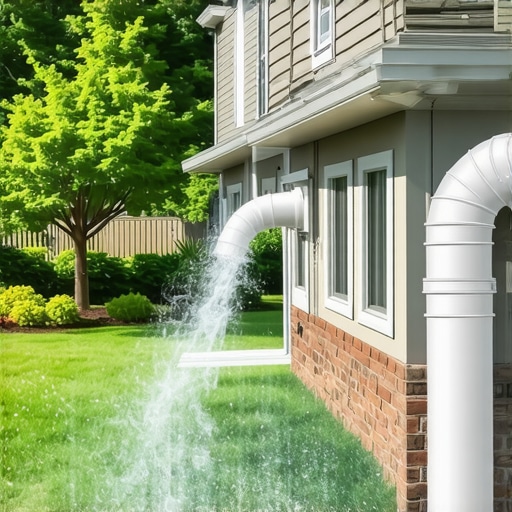
I walked around a property last autumn where the owner was baffled by a sudden crack in the drywall above his front door. He thought it was a settling issue common to the neighborhood. It wasn’t. I took one look at the northwest corner of his house and saw the real culprit: a downspout leader that had become disconnected during a heavy storm, dumping thousands of gallons of concentrated hydraulic pressure directly against his stem wall for two seasons straight. The soil had liquified, the footing had dropped nearly an inch, and now he’s looking at a $25,000 piering job. All because of a five-dollar piece of plastic that failed. Water is not just a liquid; in the world of exterior drainage, it is a relentless structural solvent. When we talk about foundation rot, we aren’t just talking about wood; we are talking about the degradation of the very earth supporting your home.
“Downspouts shall be sized based on the rainfall intensity of the region and the roof surface area.” – International Plumbing Code, Section 1106
The Physics of the ‘Gully Washer’ and Flexible Failures
In 2026, we are seeing more extreme weather patterns where three inches of rain fall in less than an hour. A standard 2,000-square-foot roof will shed approximately 1,250 gallons of water during a one-inch rain event. When that volume hits your gutters, it gains velocity. If your pitch or slope is off by even an eighth of an inch, that water backs up, overflows the fascia, and begins the slow process of rotting out your soffit. But the real danger happens at the end cap. Most homeowners use those cheap, thin-walled corrugated tubes from big-box stores. They’re easy to install, sure, but they are the weakest link in your drainage hierarchy. They clog with shingle grit, they get crushed by landscape crews, and they lack the flow velocity needed to move debris through the elbow.
Fix #1: The Heavy-Duty Corrugated Repair and Reinforcement
If you are committed to flexible solutions, you have to stop thinking about those flimsy brown or white accordion pipes. Corrugated downspout repair in 2026 involves moving toward dual-wall high-density polyethylene (HDPE). The interior is smooth to maintain water speed—essential for gutter overflow prevention—while the exterior is ribbed for strength. To fix a failing flexible line, you must ensure the leader is seated at least three inches into the extension and secured with zip screws. Never rely on friction alone. I’ve seen spring gutter startup routines where homeowners find their extensions ten feet down the lawn because the water pressure literally shot them off the house. We also need to talk about coping cap alignment on the roof edge; if your roof isn’t shedding into the center of the gutter, no extension in the world will save your fascia board repair bill.
The Hydrology of Shake Roof Gutter Protection
For those with cedar or synthetic shake, the problem is compounded. Shake roof gutter protection is unique because these roofs shed a massive amount of organic debris and oils. This ‘tea’ of organic matter creates a sludge that turns flexible extensions into a stagnant mess. This is where bamboo gutter alternatives or high-flow copper systems often fail if the miter corners aren’t sealed with high-grade tri-polymer sealant. You need volume. If you’re running a shake roof, you should be looking at 3×4 inch downspouts minimum to handle the particulate load without bottlenecking at the first splash block.
“Roof drainage systems shall be designed and constructed so as to provide for the drainage of the roof area in a manner that will prevent the accumulation of water on the roof.” – SMACNA Architectural Sheet Metal Manual
Fix #2: Sub-Surface Transition with Pop-Up Emitters
The second fix involves getting the water away from the foundation entirely by transitioning from a flexible above-ground leader to a buried 4-inch rigid PVC line. This is the gold standard for 2026. We use a flexible downspout extension only as the ‘bridge’ between the house and the ground. By burying the line and ending it with a pop-up emitter 10 to 15 feet away from the foundation, you eliminate the risk of hydrostatic pressure building up against your basement walls. This prevents the ‘weeping’ effect where moisture seeps through concrete pores, leading to mold and efflorescence. If you are worried about the cost, many companies now offer financing for gutter installs and drainage packages, making this level of protection accessible for most budgets.
Fix #3: The Multi-Story Access Strategy for High-Velocity Flow
When dealing with three-story access solutions, the physics change. Water falling from 30 feet up reaches a terminal velocity that can blow a standard flexible extension right out of the ground. In these high-head-pressure scenarios, you must use a ‘decelerator’ miter or a series of offsets to slow the water before it hits the ground-level elbow. For the 2026 season, we are seeing more gutter cleaning services recommending the installation of clean-out boxes at eye level. This allows you to clear debris from the vertical leader without climbing a ladder to the third-story fascia. It’s a practical solution for preventing the weight of a water-logged downspout from pulling the hanger out of the wood.
Final Verdict: Maintenance is the Only Guarantee
I hate to be the bearer of bad news, but there is no such thing as a maintenance-free drainage system. Whether you are using bamboo gutter alternatives or seamless aluminum, you need a spring gutter startup inspection. Check your end caps for leaks, ensure your splash blocks haven’t sunk into the mud, and verify that your flexible extensions haven’t become a home for rodents. A house is a machine designed to stay dry; once you let the water win, the structural integrity is on a countdown. Take care of your fascia, watch your pitch, and for heaven’s sake, get that water ten feet away from your foundation.
This article really highlights the importance of proper drainage and regular maintenance. I’ve personally seen how neglected downspout systems can lead to costly foundation repairs — it’s a small investment upfront that saves a lot of headaches later. I particularly appreciate the tips on using high-density polyethylene piping instead of flimsy options; durability really makes a difference when dealing with heavy rain. In my experience, people often overlook the significance of a proper pitch or the need for secure connections, which are crucial for preventing overflow and backups. I’ve also found that installing clean-out boxes at strategic points has made routine inspections much easier, especially for multi-story homes. Has anyone experimented with different emitter positions or underground piping layouts for better effectiveness in more complex landscape setups? Would love to hear some success stories or advice from fellow homeowners or contractors.