The Myth of the ‘Hands-Off’ Gutter
In my 25 years of engineering water management systems, I have seen every ‘innovation’ from foam inserts that turn into Chia Pets to robotic brushes that get stuck the moment a twig crosses their path. As we move into 2026, the market is flooded with ‘automated gutter cleaning systems’ promising a maintenance-free life. But here is the reality from someone who has spent two decades on a ladder: water is a relentless, patient architect of destruction. If your whole-house gutter systems aren’t engineered correctly, no amount of automation will save your fascia from rot or your foundation from hydraulic pressure.
[IMAGE_PLACEHOLDER]
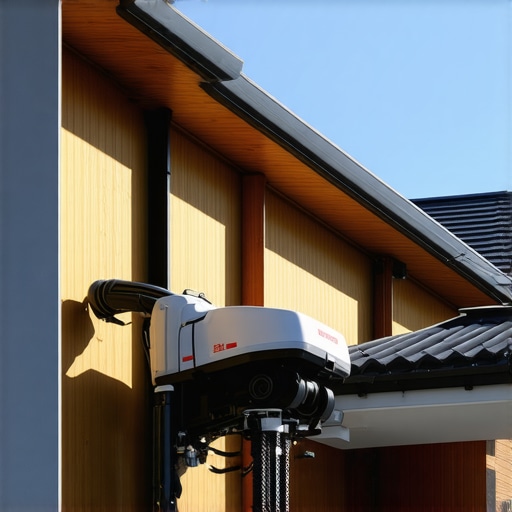
The Failure of the ‘Self-Cleaning’ Robot: A Field Report
Last autumn, I was called to a property where the owner had invested nearly six thousand dollars in a rail-mounted robotic cleaning system. This device was designed to traverse the seamless gutter installation and sweep out debris twice a week. What I found was a case study in mechanical hubris. The homeowner’s micro-mesh gutter guards had been removed to accommodate the robot’s tracks. In their place was a jammed motor assembly covered in a thick, anaerobic sludge of decomposed oak leaves and pine needles. The robot hadn’t just failed; it had become a dam. During a three-inch-per-hour downpour, the water couldn’t move toward the leader (that’s a downspout for the laypeople). Instead, surface tension pulled the water over the edge, wicking it back into the soffit and causing a slow-motion catastrophe inside the wall cavity. This is why I remain skeptical of ‘gadgets’ versus sound hydraulic engineering.
The Physics of Water Management
When we talk about maintenance-free gutter systems, we are really talking about the management of flow velocity and surface tension. A metal roof gutter transition, for instance, requires a completely different approach than a standard shingle roof. Water on a metal roof gains incredible velocity; during a ‘gully washer,’ that water will shoot right over a standard 5-inch trough. You need gutter apron installation that is tucked tightly under the roofing material to ensure the water actually makes it into the system rather than behind it. Without a proper apron, capillary action draws water upward and backward, where it finds the first gap in your fascia and begins the expensive process of wood rot.
“Downspouts shall be sized based on the rainfall intensity of the region and the roof surface area.” – International Plumbing Code, Section 1106
Why ‘Spike and Ferrule’ is a Relic of the Past
If you are still using the old spike and ferrule repair method, you are fighting a losing battle. Those seven-inch spikes are driven through the gutter, through the fascia, and into the rafter tails. Over time, the constant expansion and contraction of the metal—combined with the weight of wet debris—pulls those spikes out. Once that hole is wallowed out, the gutter loses its pitch. A gutter without a 1/4 inch slope per 10 feet is just a long, elevated mosquito pond. In 2026, we use heavy-duty internal hangers screwed directly into the structural wood. This allows the system to support the weight of a technician or a heavy snow load without sagging or pulling away.
The Reality of Leaf Guard Systems
I get asked daily about leaf guard systems. Do they work? Yes, if they match your environment. If you live under a canopy of white pines, a perforated cover is useless; those needles will stitch themselves into the holes like a needle and thread. For heavy organic loads, a high-quality micro-mesh gutter guard is the only way to go. These systems use the principle of ‘liquid adhesion’ to pull water through the mesh while shedding solids. However, even these require pressure testing gutter seals and an occasional rinse to remove the bio-film (pollen and dust) that can eventually bridge the mesh and cause overshoot.
“Gutters shall be pitched a minimum of 1/16 inch per foot to ensure positive drainage.” – SMACNA (Sheet Metal and Air Conditioning Contractors’ National Association)
The Verdict on Automation
Automated sprayers and brushes are prone to mechanical failure in the harsh environment of a roofline. The sun bakes the plastics, and the ice expands the seals. If you want a maintenance-free gutter system, skip the robots. Focus on seamless gutter installation with a 6-inch K-style profile, 3×4-inch high-capacity leaders, and a stainless steel micro-mesh. Ensure your miter joints are sealed with high-grade tri-polymer sealant and that your end caps are crimped, not just glued. Water management isn’t about fancy electronics; it’s about respecting the physics of a downpour and giving it a clear, unobstructed path away from your home’s foundation.
Reading this detailed assessment of automated gutter systems really resonates with my own experiences. I’ve installed a few of those gadgets myself and quickly learned that they tend to fail just when you need them most—especially after a heavy rain or when debris piles up. What struck me most is the emphasis on proper engineering, like the importance of correct slope and strong hangers, which often gets overlooked in favor of convenience gadgets. Personally, I’ve found that regular maintenance combined with high-quality materials makes a significant difference. Has anyone here experimented with hybrid approaches, such as installing micro-mesh guards while also periodically inspecting and cleaning their systems? I think blending durable design with a proactive maintenance routine might be the best way to handle water management without relying on unreliable tech that often adds more problems than it solves.