The $22,000 Drip: Why Your Awning is Killing Your Foundation
I recall a project in a coastal neighborhood where a beautiful cedar-shake home was rotting from the ground up. The culprit wasn’t a massive hole in the roof; it was a simple 12-foot metal awning over the side porch. Every time it rained, that awning gathered a massive volume of water and shot it directly against the brick veneer, bypassing the sub-par gutter system entirely. Five years of that ‘minor’ drip resulted in a $22,000 bill to shore up the crawlspace footings because the soil had completely liquefied. This is what happens when you treat an awning as an afterthought rather than a critical component of your home’s hydraulic profile.
The Physics of the ‘Gully Washer’ and Awning Overshoot
Most homeowners don’t realize that an awning acts as a secondary roof. In high-wind, high-volume storm zones, the water velocity coming off a slick metal or fabric surface is significantly higher than that of a granular shingle roof. This is where hydro-zooming becomes essential. As water descends an awning, it builds kinetic energy. If your gutter is mounted too low or lacks the proper high-wind gutter anchors, that water will simply bridge the gap, shooting over the front lip of the gutter and landing inches from your foundation. This leads to the dreaded ‘back-splash’ effect, where water bounces off the ground and rots your fascia and soffit from the bottom up.
“Downspouts shall be sized based on the rainfall intensity of the region and the roof surface area.” – International Plumbing Code, Section 1106
Hack 1: Custom Wood Shake Gutter Flashing and Diverter Miters
For those with premium aesthetics, wood shake gutter flashing is often installed incorrectly, leaving a gap where water can wick back into the roof deck. The first hack for 2026 is the ‘Diverter Miter.’ Instead of a standard corner, we are now engineering custom transition flashings that tuck under the shake and extend two inches over the awning’s mounting rail. This ensures that capillary action—the tendency of water to ‘climb’ backwards—cannot pull moisture into the fascia board. If you are seeing fascia board repair needs every few years, your flashing is failing, not your wood.
Hack 2: Moving from Spike and Ferrule to High-Wind Structural Anchors
If your gutters are still held up by the old spike and ferrule repair method, you are living on borrowed time. Spikes are essentially smooth nails that rely on friction. In a hurricane-rated installation, we use heavy-duty internal hangers with 3-inch structural screws. Why? Because during a storm, a gutter filled with water weighs hundreds of pounds. When wind hits that awning and creates an updraft, it puts immense torque on those spikes. They pull out, the pitch is lost, and water begins to pool, leading to mosquito breeding and rust. We now recommend hurricane-rated installations where brackets are spaced every 12 to 16 inches, rather than the standard 32 inches.
Hack 3: The Integrated Outlet Pipe Connection and Downspout Relocation
The most common failure point in awning-to-gutter transitions is the outlet pipe connection. Usually, a small 2×3 leader is used, which clogs with a single handful of oak tassels. In 2026, the trend is moving toward downspout relocation to the ‘center-flow’ position. By moving the downspout away from the end cap and toward the point of highest water concentration (usually the low point of the awning), we reduce the distance water must travel along the slope. We also recommend 3×4 oversized leaders to handle the ‘surge’ flow. If your gutter cost estimation doesn’t include 6-inch K-style troughs for awning runs, you are being undersold.
“The collector head shall be sized to prevent overflow during peak rainfall events as defined by local climatic data.” – SMACNA Residential Sheet Metal Guidelines
Bold Color Gutter Trends and Aesthetic Integration
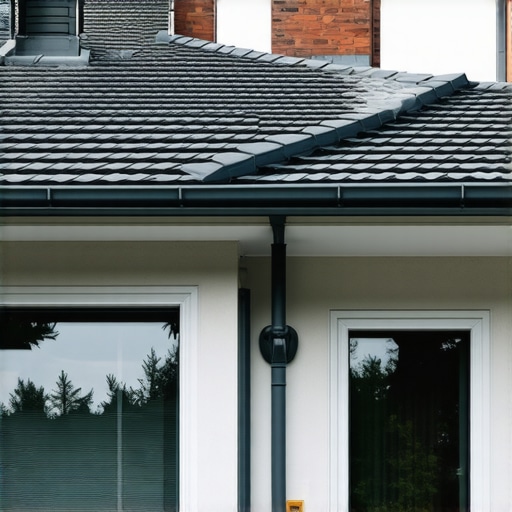
Functional doesn’t have to be ugly. The bold color gutter trends of 2026 are moving toward architectural bronzes and matte blacks that turn the gutter system into a visual frame for the house. When integrating with an awning, matching the gutter color to the awning’s support structure creates a ‘built-in’ look. This is especially important when you need gutter repair services; don’t just patch with silver sealant. Use high-grade color-matched polymer sealants that maintain flexibility during the thermal expansion of summer heat.
The Final Verdict: Dry Feet, Dry Foundation
Water is the most destructive force your home faces. Whether you are dealing with a sagging patio cover or a complex multi-tiered roofline, the goal is always the same: controlled evacuation of liquid. Proper pitch (at least 1/4 inch per 10 feet), robust hangers, and a clear path to a splash block or underground drain are the only things standing between you and a structural nightmare. Stop looking at your gutters as ‘trim’ and start seeing them as the external plumbing system they are.