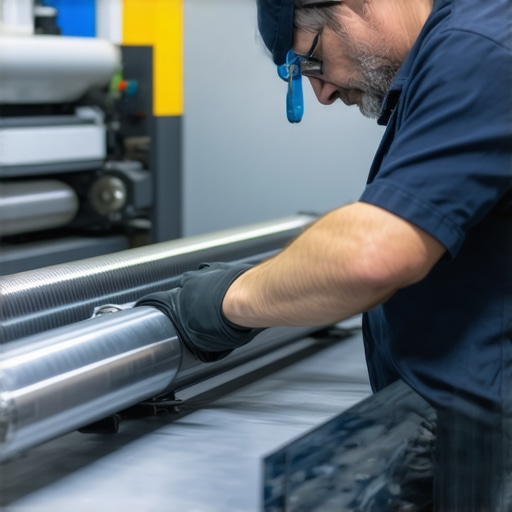
The Heartbeat of the Gutter Installation Business: Calibrating the Machine
In the world of high-quality water management, a gutter contractor is only as good as the machine they bring to the job site. Most homeowners looking at a gutter cost estimation think that aluminum gutters are simply delivered from a warehouse. The truth is much more complex. For professional gutter installation services, we rely on portable roll-forming machines that we haul in our trailers. If that machine is off by even a sixteenth of an inch, the entire run of gutter will warp, oil-can, or refuse to drain correctly. A poorly calibrated machine destroys the crucial pitch, making proper fascia gutter mounting almost impossible. Water will sit, mosquito larvae will hatch, and eventually, the fascia board itself will rot.
Calibration is not a task you do once a year. It is a weekly, sometimes daily, ritual of measuring tolerances, checking rollers, and ensuring the guillotine cutter shears cleanly without crushing the aluminum profile. Let me tell you about a job back in Portland during the wet winter of 2015. I was called to a gorgeous home where the owner had just spent thousands on custom-rolled seamless gutters. The corner of the foundation had sunk nearly two inches on the north side. When I inspected the setup, I realized the gutter machine used by the previous crew had been severely out of calibration, rolling a gutter with a subtle, almost invisible twist. This twist forced the water to pool right in the center of a forty-foot run, eventually overflowing behind the fascia board, rotting the soffit, and dumping hundreds of gallons of water directly next to the foundation wall over five winters. A single uncalibrated machine caused ten thousand dollars in structural damage.
The Anatomy of Calibration: Why Straightness Matters
To understand why calibration is critical, you have to understand the physics of on-site gutter rolling. Aluminum coil is fed into a series of hardened steel rollers that gradually bend the flat metal into a classic K-style or half-round profile. If the drive rollers apply uneven pressure, the gutter will exit the machine with a curve, either bowing upward, downward, or twisting outward.
“Gutters shall be sloped to prevent standing water and to guide water efficiently toward the downspouts or leaders. Improperly formed gutters restrict flow velocity and promote sediment accumulation.” – SMACNA Architectural Sheet Metal Manual, Section 1.3
When we set up for a project, whether it is a standard residential home or a complex membrane roof gutters installation on a flat commercial surface, we run a ten-foot test piece. We check the bottom of the gutter with a straightedge. If we detect any variation, we adjust the exit guide station. A gutter that curves upward will trap water; a gutter that curves outward will pull away from the fascia under the weight of heavy rainwater or snow. For properties in high-wind zones, this is even more critical. We must use heavy-duty high-wind gutter anchors to secure the run, but if the metal itself is pre-stressed from a bad roll, those anchors will struggle to keep the system flush against the house.
Specialized Adaptations: From Pergolas to Membrane Roofs
Not every job is a straightforward fascia gutter mounting. For example, a pergola gutter addition requires extreme precision. Pergolas do not have traditional rafter tails or thick fascia boards, meaning the gutter must be perfectly straight and light enough to be supported by specialized brackets. If your machine rolls a heavy, twisted profile, the pergola structure will warp under the load. Similarly, membrane roof gutters require a specialized flange that must slip under the roofing membrane without puncturing the material. When rolling these custom profiles, the roll-former must be calibrated to the exact thickness of the aluminum coil we are running, whether it is standard 0.027-gauge or commercial-grade 0.032-gauge.
“Waterproofing membranes must terminate properly inside the gutter lining to prevent capillary action from pulling water back into the roof deck assembly.” – International Building Code (IBC), Section 1503
If the machine is set too tight for thicker metal, it will scrape the protective painted finish off the aluminum, leaving it vulnerable to premature oxidation and unsightly rust streaks. If it is too loose, the metal will slip, causing wavy sections that look amateurish and pool water.
Protecting the System: Guards, Diverters, and Anchors
Once the gutter is rolled perfectly, our installation team must address local environmental hazards. In heavily forested areas, we often discuss gutter guard installation with homeowners. But you cannot just slap any cover on a gutter. If you have fine pine needles, a traditional screen will fail, and you might need brush gutter guards or high-performance micro-mesh. The guard must integrate seamlessly with the gutter lip, which is why a clean, unwarped front bead from a calibrated machine is so important.
We also pay close attention to roof intersections. A common failure point on two-story homes is where a roofline meets a vertical wall. Without a proper kickout diverter installation, water rushing down the valley will bypass the gutter entirely, flowing behind the siding and rotting the wall framing. Our team fabricates and installs custom kickout diverters on every job to ensure water is forced into the center of the gutter run, far away from vulnerable wall cavities.
A Professional Maintenance Checklist for Gutter Machinery
To keep our equipment rolling true, we follow a strict maintenance protocol every Monday morning:
- Debris Removal: We clean the entry guide rollers of any aluminum shavings, dirt, or pine sap that can mar the painted surface of the coil.
- Polyurethane Roller Inspection: We check the drive rollers for wear. Flat spots on these rollers will cause the metal to feed unevenly.
- Shear Lubrication: The guillotine cutter is oiled and adjusted so it cuts the metal cleanly without bending the end cap area of the gutter.
- Straightness Check: We roll a twenty-foot section on a flat surface and measure any lateral sweep or vertical twist.
Investing this time into our machinery allows us to provide gutter installation services that actually last for decades, protecting your home from the silent, destructive power of unmanaged rainwater.