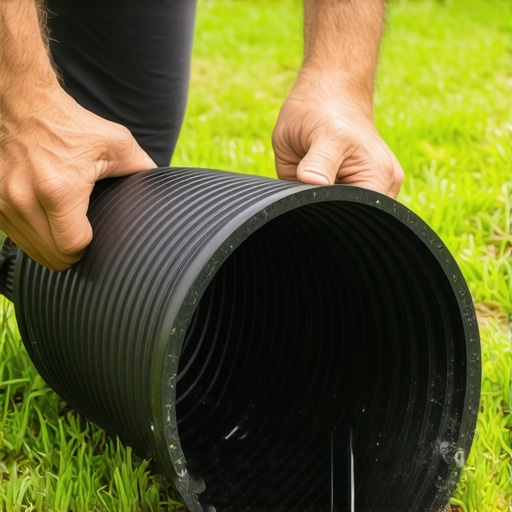
The Invisible Threat Beneath Your Lawn
I walked around a house in Gulfport, Mississippi, where the foundation had settled so severely that the front door wouldn’t latch. The homeowner was baffled. They had a beautiful whole-house gutter system and hurricane-rated installations that looked pristine. However, a single 4-inch corrugated pipe buried eighteen inches underground had been crushed by a heavy delivery truck two years prior. That pipe was the primary leader for the entire rear roof. During every tropical downpour, the water backed up, creating a subterranean lake right against the footer. This is why I tell people that your drainage system is only as strong as its weakest point. A dented pipe is not just a nuisance: it is a hydraulic bottleneck that can destroy your property value.
The Physics of Flow Velocity and Pipe Obstruction
When we talk about drainage, we are talking about fluid dynamics. Water follows the path of least resistance, but it also carries momentum. In a hurricane-rated installation, we often see 6-inch or 7-inch aluminum gutter installation projects designed to move hundreds of gallons per minute. When that volume hits a crushed corrugated pipe, the flow transitions from laminar to turbulent. This turbulence creates backpressure. In engineering terms, we call this the hydraulic head. If the water cannot move through the crushed section, it fills the vertical downspout. Once the leader is full, the weight of the water column exerts incredible pressure on the elbows and miters. I have seen steel gutter services called in because the weight of a 30-foot water-filled downspout literally tore the fascia board right off the soffit. This is why addressing a dented pipe is critical before the next storm season.
“Storm drainage systems shall be designed and installed to provide for the collection and disposal of all water that is not otherwise absorbed by the ground.” International Plumbing Code, Section 1101.2
In the southern hurricane zones, the rainfall intensity can exceed 8 inches per hour. This volume is staggering. If your corrugated pipe is dented, you are effectively trying to push a fire hose’s worth of water through a straw. The result is inevitably a blowout at the base of the house or water overshooting the scupper installation on your patio cover gutters. This overshoot erodes the soil, leading to the swampy yard syndrome that many homeowners mistake for a high water table.
The Simple Fix: The Internal PVC Splice Method
Many ‘handymen’ will tell you that you have to dig up the entire yard to fix a crushed pipe. They are wrong. While excavation is sometimes necessary for total collapses, a dented or partially crushed corrugated pipe can often be salvaged with what I call the Internal PVC Splice. This method preserves your landscaping while restoring 100 percent flow capacity. First, you must locate the precise spot of the dent. We use vacuum gutter extraction tools in reverse to blow air through the line or a simple plumbing snake to find the resistance point. Once located, you only need to dig a small two-foot window. Instead of replacing the whole run, we use a heat-manipulated segment of thin-walled PVC. By warming the PVC and sliding it inside the corrugated pipe, you create an internal structural skeleton that forces the dented corrugated walls back into their original circular shape. This provides a smooth interior surface that prevents debris from snagging, which is the primary cause of long-term clogs in patio cover gutters and whole-house systems.
“The size of a horizontal storm drain shall be based on the maximum projected roof area.” SMACNA Architectural Sheet Metal Manual
Why Corrugated Fails and How to Prevent It
Corrugated pipe is popular because it is cheap and flexible, but in the world of professional drainage, it is the bottom of the barrel. It has a high ‘Manning’s roughness coefficient,’ meaning the ribs inside the pipe slow the water down and catch every bit of silt. When you add a dent to that equation, you are asking for a clog. If you are doing a new aluminum gutter installation or upgrading to steel gutter services, I always recommend switching to Schedule 40 PVC for any underground runs. However, if you are stuck with corrugated, you must protect it. For three-story access solutions where the downspout installation involves high-velocity drops, the impact of the water hitting the bottom elbow can actually vibrate a corrugated pipe until it shifts and collapses against a rock. We call this hydraulic scouring. Ensuring the pipe is bedded in pea gravel rather than native soil is the best way to prevent future dents from ground settling or vehicle traffic.
The Role of Scuppers and High-Flow Leaders
On many modern homes, especially those with flat roofs or elaborate patio cover gutters, a scupper installation is used to move water through a parapet wall into a conductor head. This is a high-volume point. If the underground pipe is dented, the water will back up into the conductor head and spill over, often saturating the fascia and causing rot that isn’t visible until the whole-house gutter system starts to sag. During storm-resistant gutters audits, I check the pitch of the horizontal runs. A proper slope is 1/4 inch per 10 feet of run. If your pipe is dented, it effectively changes the pitch to a negative slope at the point of the crush. Standing water then sits in the pipe, attracting mosquitoes and allowing organic sludge to harden into a concrete-like substance. This is why a simple fix like the PVC splice or a localized replacement is vital for the health of your home’s foundation. Do not ignore the sound of gurgling in your downspouts; that is the sound of your drainage system gasping for air because a crushed pipe is choking it. Professional downspout installation is useless if the water has nowhere to go once it hits the ground. Keep your leaders clear, keep your pipes round, and keep the water moving away from your foundation.
{“@context”: “https://schema.org”, “@type”: “HowTo”, “name”: “How to Fix a Dented Corrugated Drainage Pipe”, “step”: [{“@type”: “HowToStep”, “text”: “Locate the dented section by running a plumbing snake or high-pressure hose through the line until it meets resistance.”}, {“@type”: “HowToStep”, “text”: “Excavate a small two-foot area around the dented section to expose the pipe.”}, {“@type”: “HowToStep”, “text”: “Heat a segment of thin-walled PVC pipe until it is slightly pliable.”}, {“@type”: “HowToStep”, “text”: “Slide the PVC segment into the corrugated pipe to act as an internal structural bridge, forcing the dent out.”}, {“@type”: “HowToStep”, “text”: “Backfill the area with pea gravel to prevent future crushing from soil movement.”}]}