The Night the Gale Force Took the Eaves: A Lesson in Lateral Load
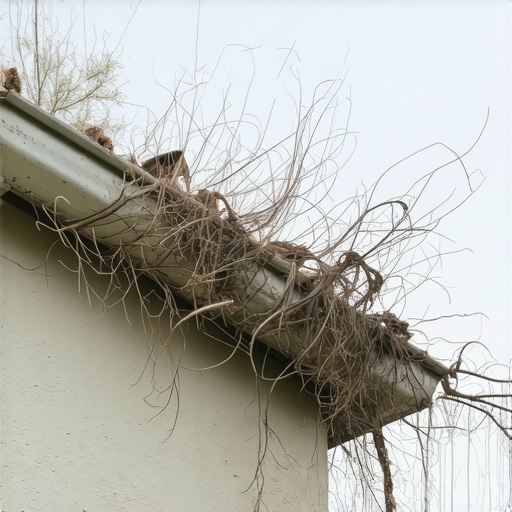
I remember a call I took out in the rural valley back in the spring of ’14. A massive storm front had pushed through with straight-line winds topping 70 miles per hour. The homeowner didn’t call because his roof was gone; he called because his gutters were hanging like limp spaghetti from the roofline, still attached to the downspouts but completely detached from the fascia. As I climbed the ladder, the problem was immediate and offensive: the original installer had used standard spikes and ferrules spaced every four feet. In high-wind environments, a gutter acts like a sail. When wind hits the face of the gutter, it creates a massive amount of lift and torque. If those hangers aren’t anchored into the structural rafter tails with more than just a smooth-shank nail, the system is guaranteed to fail. Water is heavy, but wind is violent. When you combine the weight of a rain-heavy trough with the sheer force of a gust, the friction holding a spike into the wood simply gives up.
The Physics of Wind Shear and Water Management
To understand why your gutter installation might be at risk, we have to look at the fluid dynamics of a storm. Most people think water just falls down, but in a high-wind scenario, water is driven horizontally. It hits the roof, accelerates, and is blown under the drip edge or over the back of the gutter. If your hangers are spaced too far apart, the gutter trough can twist. This twisting, or ‘torque,’ pulls the top of the hanger away from the fascia. Once that gap opens up, even by a fraction of an inch, water begins to bridge the gap behind the fascia board. This leads to rot, which further weakens the hold of the hangers. It is a death spiral for your exterior drainage system. We often see this in garage gutter installation where the structures are more exposed to the elements. Standard hangers are designed for vertical load (water weight), not the lateral load or upward lift generated during a gale. This is why we advocate for heavy-duty hidden hangers with deep-threaded screws that bite into the wood, rather than just resting in it.
“Gutters and downspouts shall be supported by anchors or hangers of approved material and size, spaced at intervals not exceeding 48 inches (1219 mm).” – International Plumbing Code, Section 1106.1
While the code allows for 48-inch spacing, any specialist worth their salt knows that is the bare minimum for a ‘perfect’ scenario. In regions with high winds or snow loads, that spacing must be compressed to 18 or even 12 inches. When we perform barn gutter repair, we often find that the wide spans of the roof collect so much wind that the gutters vibrate. This vibration acts like a hammer, slowly backing out the fasteners. By the time the homeowner notices the ‘pitch’ or ‘slope’ is off, the fascia is already riddled with holes.
Selecting the Right System: Box Style Seamless Gutters and Copper Patina
If you are looking for maximum rigidity, box style seamless gutters are the gold standard. Unlike the traditional K-style, the box profile has a flat back and a square bottom, providing more surface area to sit flush against the fascia. This eliminates the ‘air pocket’ behind the gutter that wind loves to exploit. For those interested in architectural longevity, copper patina finishes offer more than just beauty. Copper is a heavier, more rigid material that resists the warping often seen in thin-gauge aluminum. When coupled with round downspout services, the system becomes a high-capacity machine. Round leaders (downspouts) actually facilitate a faster ‘swirl’ or vortex of water, which helps pull debris through the system more efficiently than rectangular ones. This is critical during a ‘gully washer’ where flow velocity is the only thing keeping the water from overshooting the mitered corners.
The Critical Role of Fascia and Soffit Integrity
You cannot talk about hangers without talking about the substrate. If your fascia board is soft, no hanger in the world will save you. This is a common issue during lead paint gutter abatement projects on older homes. Often, the paint was the only thing holding the wood together. When we strip that away or replace the system, we find the rafter tails are soft. A proper fix involves more than just a new hanger; it requires structural reinforcement. This is where three-story access solutions become necessary. Working at those heights, you can’t just ‘eyeball’ the pitch. You need lasers to ensure that the 1/4 inch per 10 feet slope is maintained perfectly across the entire run. If a gutter is ‘level,’ it is failing. Water must move. If it stands, it adds weight, attracts mosquitoes, and increases the likelihood of the system being ripped off during a wind event.
“The design and installation of gutter systems shall account for thermal expansion and contraction, as well as the expected snow and wind loads of the specific geographic location.” – SMACNA Architectural Sheet Metal Manual
Combating the Elements: De-Icing and Erosion Control
In northern climates, the wind isn’t your only enemy. Gutter de-icing services are vital because ice is the ultimate weight-tester. An ice-filled gutter can weigh hundreds of pounds. When wind hits that frozen mass, the leverage exerted on the hangers is astronomical. If you don’t have heat tape or a properly pitched system, the ice will expand, opening the miters and popping the end caps. Furthermore, once the water leaves the system, you must have erosion control downspouts. If the water just dumps at the corner of your foundation, it will wash away the soil and eventually cause the foundation to settle. This is why we use splash blocks or underground tile to move that energy away from the house. A gutter system is only as good as its weakest link, whether that is a loose hanger, a clogged elbow, or a downspout that terminates too close to the home.
The Professional Verdict on Hanger Placement
To fix a failing system, you must go beyond the standard. We replace those old spikes with heavy-duty internal hangers that feature a ‘speed screw.’ We space them every 16 inches as a standard, and every 12 inches on high-wind corners. We also look at the ‘drip edge’ to ensure water is actually being directed into the trough and not wicking back into the soffit. If you are dealing with a complex project like a garage gutter installation or a large-scale barn repair, don’t settle for the cheap ‘big box’ brackets. They are made of thin-gauge metal that will bend the first time a heavy wind catches the eaves. Invest in thick-gauge aluminum or copper, use stainless steel screws, and ensure your hangers are biting into the rafters, not just the fascia. That is the difference between a system that lasts thirty years and one that ends up in your neighbor’s yard after the next big storm. Water management is an engineering challenge, and the hanger is the most critical piece of that puzzle.
Comments are closed.