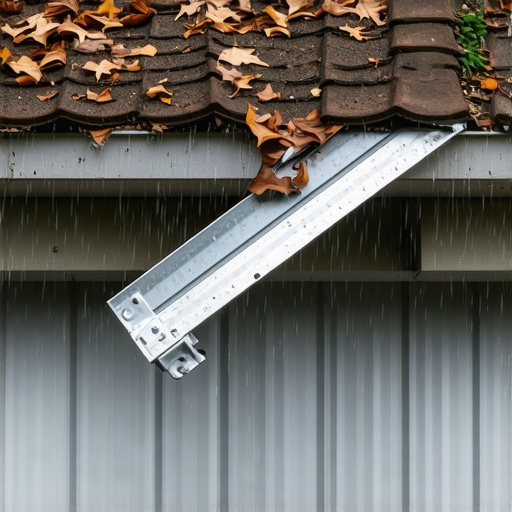
The Invisible Threat: Wind Shear, Leverage, and Your Roofline
As a veteran drainage specialist with more than twenty-five years of hands-on experience, I have seen every imaginable exterior water management failure. Homeowners often worry about heavy downpours, but they rarely think about wind. When a major storm hits, your gutter system behaves like an airplane wing. High winds grabbing a long run of aluminum or steel generate massive upward and downward aerodynamic lift. If your system relies on cheap, standard hangers or outdated installation practices, this extreme pressure will rip the system right off your fascia board, destroying your eaves and leaving your foundation defenseless against water damage.
The Narrative Matrix: A Costly Lesson in High-Wind Leverage
I recently inspected a property where a seventy-foot run of seamless aluminum gutter had completely detached from the home, twisting like a piece of cheap foil and taking a large chunk of the cedar fascia with it. The homeowner was baffled because the storm had only brought moderate rain, not a historic deluge. The explanation was simple: the original installer had spaced the hangers every four feet instead of the industry standard two feet, using flimsy, non-reinforced aluminum brackets. As high-speed winds whipped over the roofline, they created a powerful low-pressure zone that pulled the gutter upward, bending the weak hangers. Once the pitch was ruined, the next rainstorm pooled hundreds of pounds of water in the sag, causing the entire run to collapse under its own weight. This disaster could have been entirely avoided with professional seamless gutter installation using heavy-duty, internal screw-in hangers spaced at tight intervals.
“Gutter support systems must be engineered to withstand both the dead load of water-filled troughs and the wind-induced live loads specific to the local geographical region.” – SMACNA Architectural Sheet Metal Manual
The Mechanics of Failure: Standard Hangers vs. Wind Forces
To understand why standard gutter hangers fail, we must look at the structural physics of how a gutter attaches to a house. For decades, the industry standard was the spike-and-ferrule method. A large metal spike was driven through the front of the gutter, through a hollow tube (the ferrule), and into the wooden fascia board. Over time, wood expands and contracts with moisture. This natural movement loosens the spike’s grip. When high winds hit, the gutter rocks back and forth. This rocking action slowly backs the spike out of the wood. Once a spike backs out even half an inch, the leverage ratio changes drastically, and the wind easily rips the assembly free.
Even standard modern brackets can fail if they lack a reinforced spine. When wind hits a gutter, it does not just blow straight against it; it wraps around the gutter profile customization, creating a rotational force. This force tries to twist the gutter upward and backward. A cheap hanger will buckle under this rotational torque, breaking the gutter sealant application at the seams and miters, causing persistent, destructive leaks right next to your foundation.
The Dynamic Climate Context: Wind, Storms, and Water Volume
In high-wind coastal and storm-prone areas, wind rarely travels alone; it is accompanied by massive volumes of rain. When a standard five-inch gutter experiences high-speed wind, the water does not flow smoothly toward the downspout. Instead, the wind creates micro-eddies inside the trough, pushing water backward, creating high-velocity splashing, and forcing water up under the roof shingles or behind the fascia. During a severe storm, a standard system cannot handle the sheer volume of water when wind prevents proper flow velocity.
The solution requires upgrading to an oversized system, such as six-inch or seven-inch gutters paired with a heavy-duty rectangular downspout install. These larger channels provide a wider catchment area to capture water that is being blown sideways off the roof. The increased volume capacity ensures that even when wind slows down the flow rate toward the outlet, the trough will not overflow and rot your soffit.
“Downspouts shall be sized based on the rainfall intensity of the region and the roof surface area.” – International Plumbing Code, Section 1106
The Blueprint: Engineering a Wind-Resistant Drainage System
To secure a gutter system against both torrential downpours and high-velocity wind, we must design the installation using a strict structural hierarchy. Every component, from the hidden hanger to the downspout elbow, must work together to resist extreme physical forces.
Step 1: Heavy-Duty Internal Screw Hangers
Abandon any hanger that relies on nails or smooth shafts. Instead, use heavy-duty, reinforced internal hangers that clip into the front lip of the gutter and screw directly into the fascia board with a thick, self-tapping screw. These hangers should have a deep-draw thread that grips the wood grain tightly, resisting hundreds of pounds of pull-out force. For high-wind zones, do not space these hangers at the standard twenty-four inches. Instead, place them every twelve to eighteen inches to distribute the wind load across the entire run.
Step 2: Securing the Corners with Box Miters
The corners of a gutter system are highly vulnerable to wind shear because wind wraps around the corners of a house, creating complex, turbulent air currents. Standard hand-cut strip miters often buckle under this multi-directional stress. Using factory-formed box miters secured with structural rivets and sealed with a premium, high-grade tripolymer gutter sealant application ensures that these critical joint points remain completely watertight and structurally sound.
Step 3: Integrating High-Flow Downspouts
A high-wind storm will quickly wash large amounts of debris off your roof. If your system has small, restrictive outlets, a single leaf will cause an instant blockage. As water backs up, the gutter gets heavier, making it more vulnerable to wind failure. A heavy-duty rectangular downspout install, measuring at least three-by-four inches, allows water and debris to escape rapidly, reducing the physical load on the hangers.
The Maintenance Connection: Mitigating Weight and Wind Drag
Wind resistance is not just about metal and screws; it is also about maintaining your system. When a gutter is filled with heavy debris, its structural integrity is compromised. Wet organic muck weighs down the system, putting constant downward tension on the hangers. When high winds are added to this existing weight load, the brackets fail catastrophically.
While gutter installation is the foundation of a dry home, ongoing maintenance through thorough gutter debris removal and pressure washing gutters is essential. If you live in an area with heavy tree canopy, installing a leaf guard systems or a professional gutter screen installation can prevent debris accumulation. However, you must choose a system that does not increase wind resistance. Solid hood covers can act like a sail, catching the wind and ripping the gutter off the home. High-quality, low-profile micro-mesh systems allow wind to pass right over the top while keeping debris out, providing the perfect balance of wind resistance and clog protection. This self-cleaning gutter tech ensures your home remains dry and secure year after year.