The Illusion of the Quick Fix in Water Management
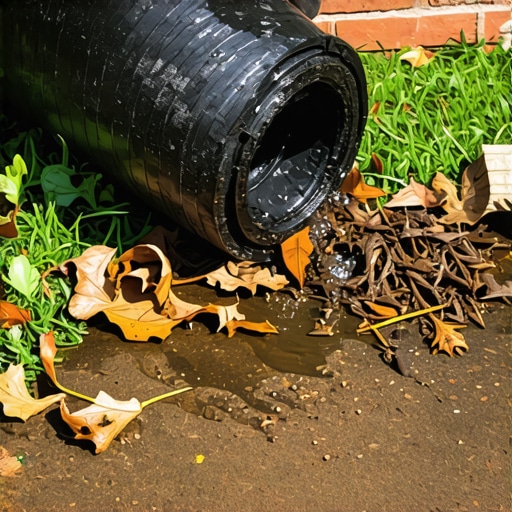
As a specialist who has spent nearly three decades diagnosing foundation failures and rotted fascia boards, I have developed a deep seated disdain for what I call ‘the hardware store special.’ You know the one: that black, accordion-style plastic tube that people slap onto the end of their downspouts. They think they are solving a problem, but they are actually planting a seed for future structural catastrophe. Water is a relentless force. It does not just flow; it carries energy, weight, and debris. When you attempt to manage that force with a flimsy piece of corrugated plastic, you are asking for trouble. In the drainage hierarchy, these extensions are at the very bottom. They represent a fundamental misunderstanding of how water interacts with a home’s envelope. Over the years, I have seen these tubes fail in every imaginable way, from internal clogs that create ice plugs to external crushing that turns a functional gutter system into a localized flood zone. If you want to protect your investment, you need to understand the physics of why these plastic solutions are a liability.
The Night the Foundation Bowed: A Cautionary Tale
A few years ago, I was called out to a residence in the northern suburbs where the homeowner was frantic. He had noticed a hairline crack in his basement’s poured concrete wall that had suddenly expanded to a quarter-inch gap. After a heavy spring rain, water was literally jetting through the wall like a fountain. I didn’t even need to go inside to know what happened. I walked to the northwest corner of the house and found the culprit: a 10-foot length of black corrugated plastic pipe. It was supposed to be moving water away from the foundation, but it had been stepped on by a lawn care crew, creating a kink. That kink acted as a dam. Because the pipe was opaque, the homeowner couldn’t see that it was filled with two years’ worth of shingle grit and decomposed organic matter. During the storm, the water backed up the leader, filled the entire vertical run of the gutter, and then exerted massive hydrostatic pressure right at the base of the foundation. The soil became a slurry, and the weight of that saturated earth pushed the wall inward. All of this happened because of a ten-dollar piece of plastic. We eventually had to install high-wind gutter anchors and a comprehensive commercial gutter installation grade drainage system to stabilize the site, but the damage was done. This is why we treat every inch of the drainage path, from the asphalt shingle gutter edge to the final exit point, with absolute precision.
“Downspouts shall be sized based on the rainfall intensity of the region and the roof surface area. The connection between the gutter and the leader must be secure and unobstructed to prevent hydraulic backup.” – International Plumbing Code, Section 1106
The Physics of Corrugation and Friction Loss
To understand why professional installers loathe flexible extensions, you have to look at the hydro-dynamics of the interior surface. A smooth wall pipe, such as Schedule 40 PVC or a heavy-gauge aluminum leader, allows water to maintain its velocity. Velocity is your friend because it keeps sediment in suspension. When water moves fast, it carries the granules from your asphalt shingles all the way out to the rock splash blocks or the pop-up emitter. However, the ‘ribs’ inside a flexible plastic extension create massive friction. This is called friction loss. As the water hits each ridge, it creates a micro-eddy, slowing down the flow. When the water slows, it drops its load. Shingle grit, pine needles, and pollen settle into the valleys of the corrugation. Within a single season, you have a layer of sludge that reduces the effective diameter of the pipe. This is where vinyl gutter repair becomes a frequent necessity, as the weight of the backed-up water pulls on the elbow and the miter joints, causing leaks at the soffit level. In a heavy downpour, the volume of water can exceed the capacity of a clogged extension, causing water to spill over the back of the gutter and rot the fascia board. This is not just a drainage issue; it is a structural threat.
The Northern Enemy: Ice Dams and Weight Load
In colder climates, the problems with plastic extensions are amplified ten-fold. Ice dam prevention starts with getting water off the roof and away from the house as quickly as possible. When you have a corrugated extension, water gets trapped in those internal ridges. As the temperature drops, that trapped water freezes. Because plastic is a poor insulator and the ridges provide more surface area for the cold air to penetrate, the extension becomes an ice block long before the rest of the system. Once that extension is frozen solid, the entire vertical leader fills with water. When that water freezes, it expands. This expansion is what splits the seams of your downspouts and pulls the hangers right out of the wood. We often see expansion joint gutters used in large commercial applications to handle thermal movement, but on a residential scale, the best defense is simply a clear, smooth-walled path. A frozen plastic extension is effectively a plug that turns your gutter into a heavy, ice-filled trough that can weigh hundreds of pounds. This weight often causes the gutter to pull away from the roofline, requiring professional ladder safety equipment to even assess the damage. By the time the spring thaw comes, the plastic has usually become brittle from UV exposure and the stress of the ice, leading to cracks and leaks that dump water directly against the foundation sill.
“Gutters and downspouts shall be constructed of materials that are resistant to corrosion and designed to withstand the expected snow and ice loads for the specific geographic region.” – SMACNA Architectural Sheet Metal Manual
The Drainage Hierarchy: Moving Toward a Permanent Solution
If we aren’t using flexible plastic, what are we using? The gold standard is a transition from the aluminum leader into a solid-wall PVC underground pipe. We start with a proper starter strip services inspection to ensure the roof edge is shedding water correctly into the center of the gutter. From there, the water flows through a seamless run to the outlet. Instead of a plastic tube, we install a clean-out assembly at the base of the wall. This allows the homeowner to remove any debris before it enters the underground portion of the system. The underground run is sloped at a minimum of 1/8 inch per foot, though we prefer 1/4 inch, to ensure that the flow velocity remains high. This pipe then terminates at a daylight exit or a structural dry well. For homeowners concerned about the system failing without their knowledge, we can even perform an overflow alarm installation, which notifies you if water levels in the gutter reach a critical height. This level of engineering is the only way to truly mitigate the risk of water damage. We also look at the asphalt shingle gutter edge to ensure that no water is ‘wicking’ back into the roof deck. Every miter is sealed with high-grade tri-polymer sealant, and every end cap is crimped and glued. This is the difference between a system that lasts thirty years and a system that fails during the first major storm. When you invest in a commercial gutter installation or a high-end residential setup, you are paying for the peace of mind that your foundation will remain dry, regardless of what the weather throws at it. Stop relying on plastic toys to do a professional’s job. Your home deserves a real water management strategy.