The Physics of Agricultural Water Management
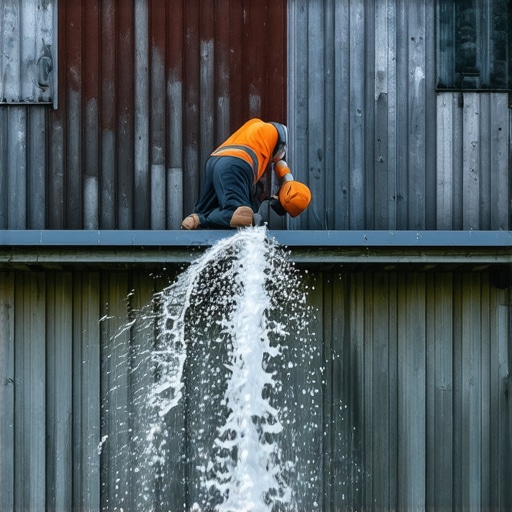
When we talk about water management on a farm, we are not dealing with a suburban bungalow. We are dealing with massive roof footprints that act like literal watersheds. I walked around a massive dairy barn last spring where the owner thought he could get away with standard residential hardware. The corner of the foundation had settled nearly three inches because a single five-inch miter had failed, dumping thousands of gallons of concentrated runoff directly onto the footer for two years. That is not just a leak; that is a structural catastrophe in the making. Agricultural runoff involves high-velocity flow, significant organic debris like hay and dust, and the constant threat of corrosive animal waste. You cannot just slap up some vinyl sections and hope for the best. You need an engineered system that respects the sheer weight and momentum of falling water.
“Downspouts shall be sized based on the rainfall intensity of the region and the roof surface area.” – International Plumbing Code, Section 1106
On a barn, the pitch or slope of your gutters is your first line of defense. While residential standards suggest a quarter-inch drop for every ten feet, heavy agricultural runoff often requires a more aggressive slope to ensure that silt and grain dust do not settle and create dams. If the water stops moving, the organic matter inside the gutter turns into a heavy, wet sludge that pulls hangers right out of the fascia. I recommend using heavy-duty box style seamless gutters for these applications. Unlike standard K-style gutters, box gutters can hold a much higher volume of water without the risk of overshooting the front lip. During a heavy downpour, the surface tension of water on a large metal roof creates a sheet of water that can easily bridge a standard five-inch gutter. You need the depth and width of an industrial-grade box system to catch that volume.
The Critical Role of Gutter Apron Aluminum
One of the most common failures I see in barn gutter systems is the absence of gutter apron aluminum. In an agricultural setting, water does not just fall off the roof; it often wicks back under the metal roofing panels due to capillary action. Without a proper apron tucked under the roofing and over the back edge of the gutter, that water will rot your fascia board and soffit in a single season. The apron ensures that every drop of runoff is directed into the trough, protecting the wooden or metal skeleton of the barn from rot and rust. When estimating your gutter cost estimation, never skimp on the apron. It is the cheap insurance policy that keeps your structural timbers dry.
“Gutters and downspouts shall be constructed of materials that are compatible with the roofing material to prevent galvanic corrosion.” – SMACNA Architectural Sheet Metal Manual
In high-intensity environments, leaf guard systems are often misunderstood. Most farmers think they are a scam, and with the wrong product, they are right. For a barn surrounded by fields, you need a high-flow perforated stainless steel mesh. Avoid the “helmet” styles that rely on surface tension, as the dust and pollen from agricultural activity will create a slick film that causes water to shoot right over the edge. A properly installed mesh system keeps the hay out but lets the water in, which is vital when you are dealing with the vacuum gutter extraction needs of a large-scale facility. If you are cleaning gutters on a three-story barn, you want to do it as infrequently as possible. This brings us to three-story access solutions. Working at these heights requires more than a ladder; it requires stabilized scaffolding or a specialized lift to ensure the end cap seals are reinforced and the leader pipes are secured with industrial straps.
Managing the Exit: Leaders and Corrugated Repair
The downspout, or leader, is the most stressed part of the system. On many barns, these are exposed to livestock or heavy machinery. I have replaced hundreds of corrugated downspout repair sections that were crushed by a tractor or a stray cow. For agricultural use, the first six feet of any downspout should be heavy-gauge steel or thick-walled PVC before transitioning back to aluminum. This prevents the frequent crushing that leads to clogs. If the bottom of your leader is crushed, the water backs up the entire vertical run. In a heavy storm, that vertical column of water creates immense pressure, often bursting the elbow or the miter at the top. To monitor this on large, remote buildings, many modern operations are now integrating gutter flow sensors. These sensors can alert a farm manager via a smartphone app if a particular run is backing up, allowing for intervention before the weight of the water tears the gutter off the building.
Advanced Integration: Pergola Gutter Addition and Drainage
Many modern agricultural facilities include annexes or outdoor staging areas. A pergola gutter addition might seem like a small detail, but when that pergola is attached to a main barn, the runoff from the larger roof can overwhelm the smaller structure. You must treat these as integrated systems. The drainage hierarchy dictates that you move water at least 20 feet away from any foundation. This is where two-story gutter services come into play, ensuring that upper-level runoff is piped directly into underground tiles rather than being dumped onto a lower roof. If you are dealing with a swampy yard near the barn, the issue is likely the size of your downspouts. Switching from a standard 2×3 leader to a 3×4 or even a 4×5 industrial leader can be the difference between a dry barn floor and a muddy mess that causes hoof rot and equipment rust. Water is a destructive force, and in the world of barns and heavy runoff, you either engineer a path for it, or it will carve its own path through your investment. { “@context”: “https://schema.org”, “@type”: “HowTo”, “name”: “How to Repair Barn Gutters for Heavy Runoff”, “step”: [ { “@type”: “HowToStep”, “text”: “Inspect the fascia for rot and install gutter apron aluminum to ensure water flow into the trough.” }, { “@type”: “HowToStep”, “text”: “Calculate roof square footage to determine if 6-inch or 7-inch box style seamless gutters are required.” }, { “@type”: “HowToStep”, “text”: “Install heavy-duty hangers every 12 inches to support the weight of water and agricultural debris.” }, { “@type”: “HowToStep”, “text”: “Replace crushed lower downspout sections with reinforced corrugated steel to withstand machinery impact.” } ] }