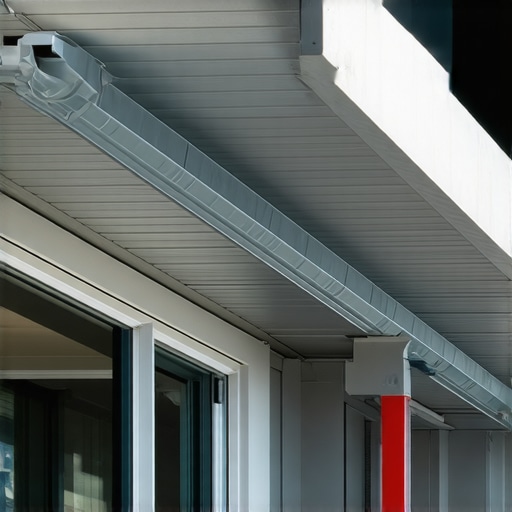
I recall walking the perimeter of a sprawling retail warehouse in the industrial district where the northwest corner of the concrete foundation had settled by nearly three inches. The facility manager was baffled, but the cause was clear to any veteran of the trade: a single heavy-duty leader had been crushed by a delivery truck months prior, and every subsequent rainstorm had dumped a concentrated torrent of five thousand gallons directly into the soil at the base of the structure. This is not a failure of a simple pipe; it is a failure of a hydraulic system designed to protect millions of dollars in real estate. In the commercial sector, we do not deal with the light drizzles that a residential 5-inch aluminum gutter can handle. We deal with massive roof surface areas where the water volume reaches a velocity that would rip standard materials right off the fascia. This is why gauged steel is the non-negotiable standard for any serious commercial gutter installation.
The Physics of High-Volume Water Management
When you analyze a commercial roof, you are looking at thousands of square feet of non-porous surface. During a peak rainfall event, that surface acts as a massive collection tray. The water moves across the metal roof gutter transition with significant kinetic energy. If your gutter system is under-sized or constructed from thin-gauge materials, the water will simply jump the front lip of the gutter, a phenomenon known as overshoot. Gauged steel, specifically 22-gauge or 24-gauge galvanized or Galvalume, provides the structural rigidity to maintain its shape under the immense weight of fast-moving water. This rigidity is critical because even a slight deflection in the gutter wall can change the pitch and cause water to pool, leading to premature corrosion and the weight-induced failure of the hangers.
“Downspouts shall be sized based on the rainfall intensity of the region and the roof surface area.” – International Plumbing Code, Section 1106
In regions prone to severe weather, hurricane-rated installations are a necessity. This involves more than just stronger metal; it requires a specific engineering approach to how the system is anchored to the building. We use heavy-duty steel hangers spaced every 12 to 18 inches, secured directly into the structural rafters or the building steel. This ensures that even during high-wind events, the gutter remains an integral part of the building envelope rather than becoming a dangerous projectile. When we perform pressure testing gutter seals on these systems, we are looking for the absolute integrity of the joints. A leak in a commercial system is not just a drip; it is a point of focused erosion that can compromise the soffit and eventually the interior wall assembly.
Advanced Diagnostics: Camera Scoping and Sensors
Modern commercial water management has evolved beyond the ladder and bucket. We now utilize camera scoping for gutters to inspect the internal condition of long-run box gutters and underground drainage lines. This allows us to identify blockages or structural collapses deep within the system that are invisible from the roofline. Furthermore, for high-value properties, we are increasingly installing gutter flow sensors. These electronic monitors alert facility managers to changes in flow velocity or the presence of standing water, indicating a clog or a change in the pitch/slope that requires immediate attention. These sensors are particularly valuable on large-scale complexes where manual inspection of every miter and end cap is labor-intensive and infrequent.
“The design of a gutter system shall provide for the expansion and contraction of the metal to prevent the buckling of joints and the failure of fasteners.” – SMACNA Architectural Sheet Metal Manual
The thermal expansion of steel is a critical factor in long commercial runs. A hundred-foot run of steel gutter will expand and contract significantly between the heat of a summer afternoon and a cold night. Without proper expansion joints and heavy-duty hangers that allow for this movement, the system will eventually tear itself apart at the miters. This is why we insist on gauged steel; its lower coefficient of thermal expansion compared to aluminum makes it far more stable over long distances. We also integrate specialized components like custom splash blocks and pop-up emitters at the discharge point of the leader to ensure the water is moved far away from the foundation footings.
Maintenance and Insurance Claim Assistance
Neglecting a commercial system is a recipe for a catastrophic insurance claim. We provide comprehensive roof gutter sweeping and seasonal gutter cleaning services designed to keep the system at peak efficiency. When debris builds up, it traps moisture against the metal, leading to the breakdown of even the best coatings. If a storm does cause damage, our team provides insurance claim assistance, providing the technical documentation and photographic evidence from our camera scoping to prove the necessity of a full-scale replacement rather than a superficial patch. Whether it is a standard warehouse or a complex pergola gutter addition for an outdoor commercial space, the engineering remains the same: calculate the load, select the correct gauge, and ensure the slope is perfect. Anything less is just waiting for the foundation to sink.