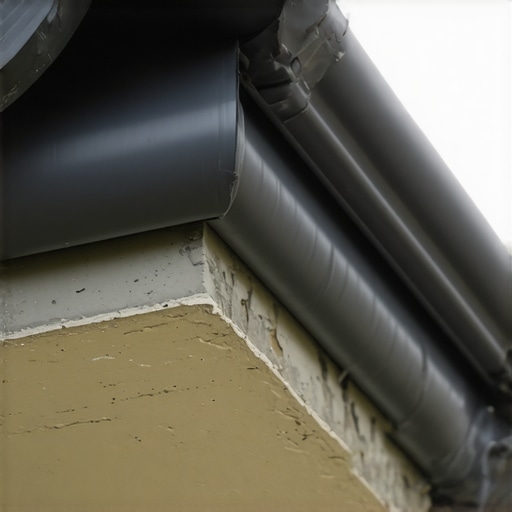
The Hidden Threat of Built-In Gutters
In my twenty-five years of staring at rooflines, nothing quite matches the aesthetic appeal or the structural headache of a built-in gutter system. Often called box gutters or Yankee gutters, these systems are integrated directly into the roof framing or the top of the cornice. When they work, they are invisible and elegant. When they fail, they are a slow-motion demolition crew for your home foundation and interior walls. I recently walked a property where a historic mahogany cornice was literally dripping with wood rot because a previous contractor tried to seal a box gutter with cheap roofing tar. The tar had cracked within a single season, allowing water to seep behind the fascia and travel down the interior of the wall. By the time I arrived, the homeowner wasn’t just looking at a gutter installation; they were looking at a five-figure structural restoration. This is why we move away from temporary patches and toward EPDM membrane liners.
“Roof drainage systems shall be designed and installed to prevent water from entering the building and to ensure that collected water is discharged away from the structure.” – International Plumbing Code, Section 1101.2
The Physics of Failure in Box Gutters
Why do these systems fail? It comes down to thermal expansion and hydrostatic pressure. Metal liners, whether made of copper, tin, or galvanized steel, are subject to massive temperature swings. In the summer, the metal expands; in the winter, it contracts. Over decades, this constant movement fatigues the soldered joints. Once a joint snaps, water finds the path of least resistance. During a heavy downpour, the volume of water creates hydrostatic pressure that pushes moisture into every microscopic crack. If you have a shake roof, the problem is compounded. Shake roof gutter protection is often overlooked, leading to organic debris sitting in the trough, holding moisture against the metal and accelerating corrosion. When we perform steel gutter services on these older systems, we often find that the metal is so thin it resembles lace more than a drainage component.
Why EPDM is the Superior Modern Solution
EPDM (Ethylene Propylene Diene Terpolymer) is a synthetic rubber membrane that has been the gold standard for flat roofing for years. Applying it to built-in gutters is a logical evolution. Unlike metal, EPDM has an elongation capacity often exceeding 300 percent. This means it can stretch and shrink with the house without tearing. When we perform a spring gutter startup, we aren’t just cleaning out leaves; we are inspecting the integrity of these membranes. For a failing box gutter, we remove the old, corroded metal, perform the necessary fascia board repair to ensure a solid substrate, and then lay down a continuous sheet of EPDM. This creates a seamless, waterproof bathtub within your roofline. Because there are no soldered miters to fail, the risk of a leak is virtually eliminated. This is also an eco-friendly gutter disposal process, as we are often removing lead-coated copper or old rusted steel that can be properly recycled rather than just patched with toxic chemicals.
“Built-in gutters must be lined with a material that accounts for thermal expansion and provides a watertight seal at all transition points to avoid moisture infiltration into the building envelope.” – SMACNA Architectural Sheet Metal Manual
The Engineering of the Discharge System
A gutter is only as good as its leader. If the box gutter is the reservoir, the downspout is the relief valve. During our installs, we often find that the original 2-inch round downspouts are woefully inadequate for modern rain intensities. We frequently upgrade these to larger capacities and integrate a French drain connection at the base. If the water simply dumps at the corner of the house, you are trading a roof leak for a cracked foundation. We use high-wind gutter anchors to ensure that the transition from the EPDM-lined box to the external downspout is secure. We also look at corrugated downspout repair for those homeowners who have existing underground pipes that have been crushed by tree roots or soil settling. Ensuring the water moves at a high velocity away from the fascia and the splash block is critical to the longevity of the entire system.
Managing Debris and High-Volume Flow
In regions with heavy snow or dense tree canopies, the built-in gutter faces its toughest test. Ice dams are the primary enemy in northern climates. When water freezes and expands, it can lift the edges of a metal liner. EPDM remains flexible down to -40 degrees, preventing this lifting action. For homes surrounded by oaks or pines, we might discuss helmet-style guards for the transition points, though most built-in systems require a more custom approach to debris management. The goal is to maintain the pitch/slope. Even a slight dip in the gutter bed will cause water to pool, leading to sediment buildup. A proper 1/4 inch per 10 feet slope must be maintained in the substrate before the EPDM is glued down. This ensures that even during a light mist, the water is moving toward the end cap and into the leader, preventing the stagnant water that attracts mosquitoes and causes odors.
The Maintenance Protocol
Even with a high-end EPDM liner, you cannot set it and forget it. A spring gutter startup is mandatory to clear out the winter’s grit. We check the termination bars where the EPDM meets the roof deck and ensure the adhesive is still holding tight. We look for any signs of physical damage from falling branches that might have punctured the membrane. However, compared to the yearly ritual of soldering and tarring metal gutters, the EPDM system is remarkably low-maintenance. It provides a long-term, engineered solution that respects the architecture of the home while providing the waterproofing of a modern commercial building. Protecting a home from water damage is a game of inches and angles, and the EPDM liner is the most effective tool we have to win that game. “, “image”: {“imagePrompt”: “A close-up technical photo of a built-in box gutter being lined with black EPDM rubber membrane. A professional contractor’s hands are shown using a small roller to smooth the membrane against the inner wooden wall of the gutter. The surrounding roof has cedar shakes, and the background shows a clean, organized construction site with high-quality tools.”, “imageTitle”: “Installing EPDM Membrane in a Box Gutter”, “imageAlt”: “A specialist installing a black rubber EPDM liner into a historic built-in gutter system to prevent leaks.”}, “categoryId”: 0, “postTime”: “”}