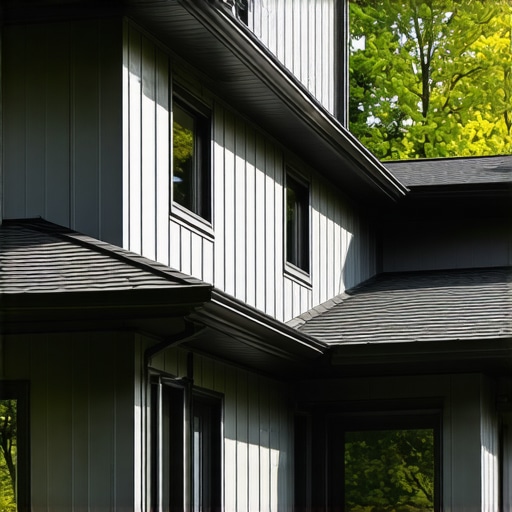
Beyond the White Plastic: The Era of Dark Charcoal Water Management
For decades, the default for every homeowner was white aluminum or, worse, that flimsy sectional vinyl you find at the big-box stores. But the landscape is shifting. As a gutter specialist who has spent twenty-five years on a ladder, I have seen every trend come and go. Right now, dark charcoal is the undisputed king of curb appeal. It creates a crisp, architectural frame for the home. However, transitioning to dark gutters is not just about choosing a color from a swatch. If you do not understand the physics of dark metal and the hydraulic requirements of your specific roofline, those beautiful charcoal gutters will become a sagging, leaking nightmare within three seasons.
I remember a call-out last autumn to a custom-built modern farmhouse. The homeowner had invested nearly six thousand dollars in a dark charcoal aluminum gutter installation. From the curb, it looked like a magazine cover. But as soon as I climbed the ladder, the reality was grim. The contractor had used standard spacing for the hangers, completely ignoring the thermal expansion properties of dark-colored aluminum. In the summer sun, those dark gutters were reaching temperatures twenty degrees higher than white gutters. The metal expanded, the miters buckled, and because the installer had used old-school spikes and ferrules instead of heavy-duty screw-in hangers, the entire run was pulling two inches away from the fascia. The water was not even hitting the gutter anymore; it was cascading behind the metal and rotting the soffit from the inside out.
“Downspouts shall be sized based on the rainfall intensity of the region and the roof surface area.” – International Plumbing Code, Section 1106
The Physics of Dark Metal: Thermal Expansion and Sealant Integrity
When you choose a dark charcoal finish, you are signing up for higher thermal absorption. This is a crucial detail most