The Illusion of the Silver Bullet
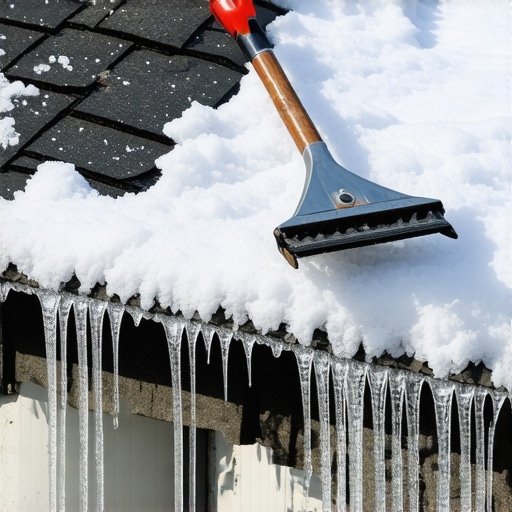
I have spent twenty-five years on a ladder, and if there is one thing I have learned, it is that homeowners love a quick fix. When the snow starts piling up and those first ominous icicles begin to form, the immediate reaction is to reach for a roof rake. It looks simple enough: pull the snow off, save the roof. But as a drainage specialist, I see the aftermath every spring. I have walked onto properties where the entire perimeter of the lawn is littered with asphalt granules, the lifeblood of a shingle roof, all because a homeowner thought they were being proactive. Your roof rake is often a blunt instrument being used in a situation that requires a scalpel. You are not just moving snow; you are frequently grinding the protective surface off your shingles and creating a rough texture that actually encourages ice to grab hold even tighter the next time it freezes.
The Night the Gutters Screamed
I remember a specific job back in the winter of 2021 after a particularly nasty freeze-thaw cycle in a mountain suburb. The homeowner called me because he heard a sound like a gunshot in the middle of the night. When I arrived, a forty-foot run of heavy-gauge seamless aluminum gutter was hanging at a forty-five-degree angle, tethered to the house by a single surviving hanger. The weight of the ice dam had literally sheared the deck screws right through the fascia board. Why? Because the original installer had spaced the hangers every thirty-six inches, a standard practice in the south, perhaps, but a death sentence in the north. The ice had filled the trough, expanded behind the back of the gutter, and used the fascia as a lever. No amount of roof raking would have saved that system because the failure wasn’t just on the roof; it was a fundamental engineering collapse of the drainage system itself.
“Downspouts shall be sized based on the rainfall intensity of the region and the roof surface area.” – International Plumbing Code, Section 1106
The Hydro-Physics of the Ice Dam
To understand why raking is a secondary concern, we have to look at the physics of heat transfer. An ice dam starts in your attic, not on your shingles. When heat escapes through the ceiling because of poor insulation or a lack of proper soffit ventilation, it warms the underside of the roof deck. The snow in contact with the shingles melts, and the liquid water runs down the slope. Once that water reaches the eave, which is cold because it overhangs the exterior of the house, it refreezes. This is the birth of the dam. As more water melts and hits that wall of ice, it pools. This is where surface tension and capillary action become your enemies. The pooling water finds its way under the shingles, through the starter strip services area, and eventually drips into your wall cavity. When you use a roof rake, you are only removing the top layer of fluff. You aren’t addressing the thermal bridge that is causing the melt, and you certainly aren’t clearing the frozen leader or the end cap that is keeping the system from draining.
The Hidden Damage: Why Rakes Fail
Most people do not realize that shingles are designed to shed water, not to withstand the mechanical shearing force of a metal rake head. Each pass of the rake scrapes away the ceramic-coated granules that protect the asphalt from UV rays. Once those granules are gone, the sun bakes the asphalt, causing it to crack and curl. Furthermore, in houses with shake roof gutter protection, the rake can catch on the natural texture of the wood, splintering the shakes and creating even more pathways for moisture. If you are dealing with a three-story access solution, the leverage you are applying from the ground is massive. You are pulling downward on the edge of the roof, often stressing the starter strip and the gutter hangers simultaneously. It is a recipe for long-term structural fatigue.
“The gutter system shall be securely fastened to the building to support the weight of the gutter and its contents when full of water or ice.” – SMACNA Architectural Sheet Metal Manual
The Drainage Hierarchy Solution
If you want to stop ice dams, you need to stop thinking about the rake and start thinking about the system. It begins with gutter installation that accounts for snow load. In northern climates, hangers must be spaced every twelve to eighteen inches, not the standard twenty-four. We use heavy-duty screw-in hangers that bite deep into the rafter tails, not those old spikes and ferrules that pull out the moment the wood gets damp. Next, consider your downspouts. If your leaders are dumping water onto the ground right at the foundation, that water is going to freeze and create a skating rink that backs up into the gutter. An underground downspout drainage system is essential. By piping that meltwater twenty feet away from the house into a pop-up emitter, you ensure that the exit point remains clear even when the ground is frozen. This keeps the entire vertical column of the downspout from turning into a solid plug of ice.
The Role of Gutter Protection
Not all guards are created equal when it comes to ice. Many people think helmet-style guards will prevent ice dams. In reality, during a deep freeze, the metal surface of the helmet can actually contribute to icicle formation. The water follows the curve of the guard, but the cold air circulating inside the gutter freezes it before it can drop into the trough. This is why I often recommend a heated micro-mesh system for homeowners in high-snow areas. These systems use a heat cable integrated into the gutter and the guard itself, ensuring that the path to the downspout remains liquid regardless of the temperature. It is about maintaining the flow velocity of the water so it never has a chance to sit and transition into ice. Pressure washing gutters in the late fall is also a critical step; even a small layer of organic sludge can act as a seed for ice crystals, accelerating the damming process.
The Final Word on Maintenance
Your gutters are the most undervalued part of your home’s exterior. They are the frontline defense against foundation erosion and basement flooding. Relying on a roof rake is like trying to fix a leaky pipe with a bucket instead of calling a plumber. You need a comprehensive approach that includes professional end cap replacement to prevent leaks at the run-ends, starter strip services to seal the roof edge, and a robust gutter warranty service that covers the structural integrity of the hangers. Stop raking your shingles into oblivion. Address the insulation in your attic, clear your miters and elbows, and ensure your drainage system is engineered for the specific climate you live in. Water is a patient destroyer, but with the right engineering, you can keep it in its place.