The High Stakes of Commercial Water Management
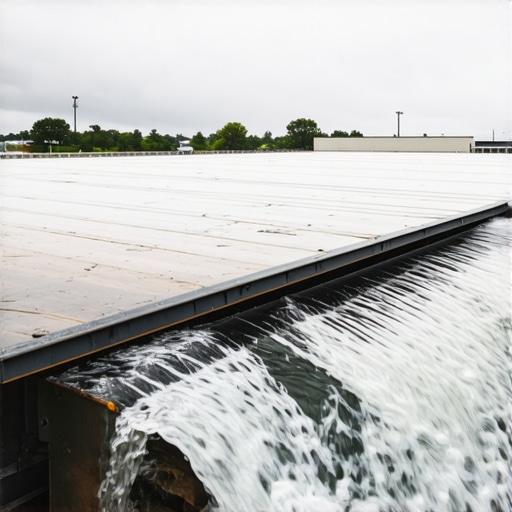
When a cloudburst hits a commercial property, we are not just talking about a few drips off a shingle. We are talking about thousands of gallons of water per minute cascading across a flat surface, searching for any weakness in the perimeter. I recall a project in the Gulf Coast where a 40,000 square foot warehouse suffered a structural compromise in the parapet wall. The culprit? A single leader box that was undersized for the local rainfall intensity. Over five years, the overflow saturated the soil at the corner of the building, leading to a foundation settlement that cost more to fix than the entire original roof. This is why I am obsessive about drainage hierarchy. If you do not control the water, the water will control your profit margins and your building integrity.
The Physics of the Flash Flood: Why Systems Fail
Commercial flat roofs often rely on a combination of internal drains and perimeter systems. When a flash flood occurs, the sheer volume of water creates what we call hydraulic head pressure. Water piles up. On a flat roof, this weight is immense. If your leader box gutters are not designed to handle the peak flow velocity, the water backs up, turning your roof into a swimming pool. This is where EPDM gutter seals become critical. If the seals at the joints of your commercial troughs are degraded, that standing water will find a way into the building envelope. I have seen old gutter demolition projects where the fascia and soffit behind the metal were completely rotted because the installer used cheap caulking instead of a proper EPDM gasket system.
“Primary roof drainage systems shall be sized to handle the maximum rate of rainfall based on a 100 year hourly rainfall rate.” – International Plumbing Code, Section 1106.1
The transition from the roof membrane to the gutter is the most common point of failure. Using gutter apron aluminum is mandatory in my book. It ensures that water bridging the gap behind the metal does not happen. Without a proper apron, surface tension pulls water back against the building, leading to unseen mold and structural rot. When we look at surface tension screens for commercial applications, they must be high-volume. A screen that works for a residential 5-inch gutter will fail instantly on a commercial 7-inch system during a downpour, acting as a dam rather than a filter.
Advanced Monitoring and Modern Trends
We are entering an era of smart gutter monitoring. For a commercial property manager, knowing that a leader is obstructed before the rain starts is invaluable. These sensors detect standing water and temperature changes, alerting maintenance teams before a minor clog becomes a major liability. While functionality is king, we are also seeing bold color gutter trends and copper patina finishes becoming popular in high-end commercial architecture. A copper patina finish offers incredible longevity, but the installation requires precision miters and heavy-duty hanger spacing to support the weight. For smaller outbuildings, shed gutter systems are being upgraded to match the main structure, ensuring total site water management.
“The size of the conductor shall be based on the diameter of the circular pipe or the equivalent cross-sectional area of the rectangular pipe.” – SMACNA Architectural Sheet Metal Manual
Solving the Drainage Hierarchy
The hierarchy of drainage starts at the roof and ends at the discharge point. If you have the best 6-inch gutters but they dump into a splash block that sits in a low spot, you have failed. You must move the water. This involves calculating the pitch accurately. A pitch of 1/16 inch per foot is the bare minimum for commercial runs, but I prefer 1/8 inch to ensure high-velocity clearing of silt and debris. If the budget is an issue, many firms now offer financing for gutter installs to ensure the system is built to last rather than built to a temporary price point. Proper end cap sealing and heavy-duty elbow transitions are the final pieces of the puzzle to ensure that every drop of water is directed away from the foundation and into the proper storm management system.