The Invisible Destroyer: Why Your Old Gutter Spikes Are Failing
In twenty-five years of inspecting residential water management systems, I have seen more foundation damage caused by a simple five-cent nail than by any natural disaster. I recently walked around a property where the owner was convinced he had a catastrophic plumbing leak in his basement. The concrete was weeping, the drywall was molding, and the smell of rot was unmistakable. After five minutes on a ladder, the culprit was clear: a single ten-inch spike at the corner of a forty-foot run had backed out by just three-quarters of an inch. That tiny gap, caused by years of thermal expansion and contraction, allowed a heavy curtain of water to bypass the gutter entirely. This water didn’t just fall; it clung to the fascia board through capillary action, traveled behind the siding, and dumped directly into the foundation footer for three consecutive seasons. This is the reality of the spike and ferrule system. It is a legacy method that belongs in the scrap bin of history. When you are dealing with composite shingle services or complex rooflines, you cannot rely on a friction-fit nail to hold back hundreds of pounds of water and debris.
“Downspouts shall be sized based on the rainfall intensity of the region and the roof surface area.” – International Plumbing Code, Section 1106
The Physics of Failure: Spikes vs. Hydrostatic Pressure
To understand why hidden hangers are the only permanent solution, we have to look at the hydro-zooming reality of a downpour. When rain hits your roof, it gains velocity. By the time it reaches the eave, it is a pressurized sheet of water. If your gutters are held by spikes, that water weight is constantly pulling against a smooth-shank nail driven into the grain of your fascia board. In Northern climates, this issue is magnified ten-fold. When snow accumulates and begins to melt, it creates an ice dam. That ice is heavy and it expands. It pushes the gutter outward. A spike has zero mechanical grip to resist this lateral force; it simply slides out of the wood like a hot knife through butter. Once that spike moves even a fraction of an inch, the pitch of the gutter is compromised. Standing water then begins to accumulate, leading to rust in older steel systems and providing a breeding ground for pests. This often necessitates gutter animal removal as squirrels and birds find the sagging gaps the perfect entry point into your soffit and attic space.
The Hidden Hanger Advantage: Engineering a Better Hold
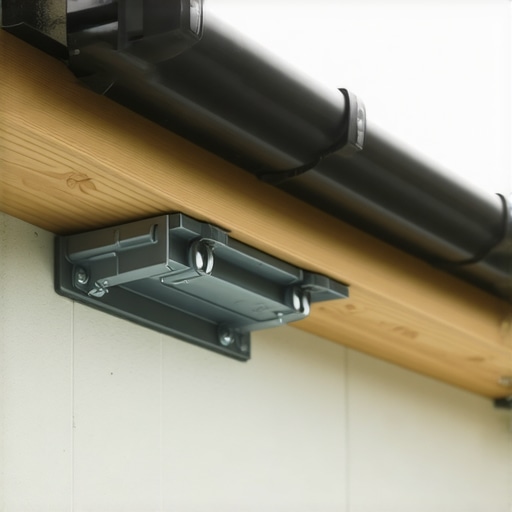
The hidden hanger is not just a bracket: it is a structural reinforcement. Unlike a spike that goes through both the front and back of the gutter, a hidden hanger clips into the front lip and creates a tension-based support system. The heavy-duty screw is driven into the fascia at an angle, biting deep into the wood fibers. This creates a mechanical bond that can support significantly more weight per linear foot. When we perform on-site gutter rolling, we specify heavy-duty hangers every twelve inches in snow-prone regions. This ensures that even during a blizzard, the weight load is distributed across the entire length of the fascia board rather than being concentrated on a few failing nails. For homeowners with shed gutter systems or smaller outbuildings, the same logic applies. Just because the roof is smaller does not mean the physics of water change. A small shed can still dump thousands of gallons of water near its foundation if the gutters sag.
“The gutter shall be sloped to provide positive drainage to the downspouts.” – SMACNA Residential Sheet Metal Guidelines
Navigating Complex Roof Transitions
Not every house is a simple rectangle. When dealing with a metal roof gutter transition, the water velocity is much higher because metal has less friction than asphalt. In these cases, spikes are virtually guaranteed to fail within the first two years. The sheer force of water hitting the back of the gutter can vibrate spikes loose. This is where scupper installation or oversized 6-inch seamless systems become necessary. For flat roofs or those with parapet walls, we often look at membrane roof gutters which require specialized flashing to ensure water doesn’t get trapped between the membrane and the gutter wall. If you are managing a patio cover gutters project, you have to be even more careful with weight, as the framing is often thinner than a standard house fascia. Hidden hangers allow for a cleaner look and a much stronger attachment to these lighter structures.
The Water Management Audit: A Step-by-Step Restoration
If you currently have spikes, your first step is a water management audit. Look for the ‘silver ring’ around the head of the spike. If you see a gap between the nail head and the gutter face, your system is already failing. Replacing these with hangers requires a systematic approach. First, you must remove the old spike and ferrule. This often leaves a large hole in the fascia which should be treated with a high-quality wood sealer to prevent rot. Second, you must re-verify the slope. A proper gutter must have a pitch of at least one-quarter inch for every ten feet of horizontal run. If the slope is wrong, the best hangers in the world won’t save your foundation. Third, install the hangers. For three-story access solutions, this often requires specialized scaffolding or high-reach ladders to ensure the installer can get the correct angle on the screw. Once the gutters are secured, consider the exit point. I always recommend rock splash blocks over the cheap plastic alternatives. A heavy rock block won’t wash away during a storm and it effectively dissipates the energy of the water coming out of the leader, preventing soil erosion near the foundation.
Final Verdict: Stop Patching and Start Engineering
Water is the most destructive force your home will ever face. It is patient, it is heavy, and it is persistent. Continuing to hammer in falling gutter spikes is a fool’s errand that will eventually lead to a collapsed gutter or a cracked foundation. By switching to hidden hangers, you are moving from a friction-based system to a mechanical fastening system. You are ensuring that the pitch remains true and that the water is directed where it belongs: away from your home. Whether you are dealing with composite shingle services or a modern metal roof, the priority remains the same: keep the water moving. Invest in the right hardware today or pay for a foundation specialist tomorrow. The choice is yours, but the physics of rain won’t wait for you to decide.