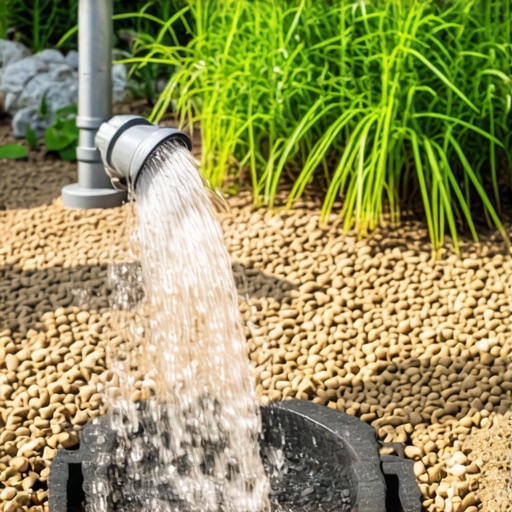
The Savannah Sinkhole: A Cautionary Tale of Water Management
I recall walking onto a property in Savannah where the homeowner was terrified. A literal sinkhole had begun to form beneath the corner of their concrete porch. This was not a geological fluke. It was the result of a single 2×3 downspout dumping thousands of gallons of water directly into the red clay soil over a decade. The homeowner thought they had a foundation problem, but what they really had was a water management failure. The water had carved out a subterranean cavern because it had nowhere to go but down. When we look at soil washout, we are looking at the physics of displacement. Water is heavy, weighing roughly 8.34 pounds per gallon. During a heavy Southern storm, a 2,000 square foot roof can shed over 1,200 gallons of water in a single hour. If that volume is concentrated through one or two points without proper dispersion, you aren’t just watering the lawn: you are hydraulic mining your own foundation.
The Physics of Water Velocity and Soil Erosion
To understand why your yard is disappearing, you have to look at the kinetic energy of falling water. When rain hits your roof, it gains velocity as it slides down the shingles. Without a gutter system, that water falls from the eave, often twelve to twenty feet in the air, striking the ground with enough force to displace soil particles instantly. This is where professional gutter installation services become an engineering necessity rather than a cosmetic upgrade. Once the soil is displaced, a small trench forms. This trench then acts as a canal, accelerating the next wave of water and carrying away even more silt and topsoil. This is why you see those ugly bare patches of dirt and exposed roots near your house. It is a cycle of destruction that starts at the roofline.
“Downspouts shall be sized based on the rainfall intensity of the region and the roof surface area.” – International Plumbing Code, Section 1106
The Anatomy of a High-Performance Gutter System
Many homeowners call for a sagging gutter fix thinking it is just a loose screw. In reality, a sagging gutter is often a sign of improper hanger spacing or weight overload from trapped debris. When a gutter sags, the Pitch or Slope is ruined. Water pools in the low spot, becomes a breeding ground for mosquitoes, and eventually overflows. This overflow happens right against the Fascia board, leading to rot that can spread to the Soffit. To stop erosion, the water must stay inside the metal. This requires gutter apron flashing, which is a metal drip edge that tucks under the first course of shingles and hangs over the back of the gutter. Without this, water uses surface tension to crawl behind the gutter, rotting your wood and saturating the soil right at the foundation line.
Managing Thermal Expansion and Volume
In regions with high temperature swings, expansion joint gutters are critical. Metal expands and contracts. If you have a fifty foot run of seamless aluminum without an expansion joint, the metal will buckle and pull the Hangers out of the wood. Once those hangers are loose, the End Cap might leak, or the entire run might tilt, causing the very washout issues we are trying to prevent. For homeowners with patio cover gutters, the challenge is even greater because these systems often have a lower capacity and are integrated into the structure of the outdoor living space. If these fail, you end up with a muddy mess right where you try to relax.
The Downspout Hierarchy: Sizing for Storms
In the South, we deal with “gully washers” that can dump two inches of rain in twenty minutes. A standard 5-inch gutter with a 2×3 Leader (downspout) simply cannot keep up. The water backs up, shoots over the front of the gutter, and destroys your landscaping. This is why I advocate for 6-inch or even 7-inch hurricane-rated installations. By upgrading to 3×4 inch downspouts, you double the drainage capacity. This ensures that even during a tropical depression, the water moves through the Elbow and out the system rather than over the side.
“Thermal expansion and contraction in gutter systems must be accounted for by the use of expansion joints on long runs.” – SMACNA (Sheet Metal and Air Conditioning Contractors’ National Association)
Erosion Control: Moving Water Away from the Slab
The job isn’t done when the water hits the ground. A Splash Block is the bare minimum, but for real erosion control, you need to move the water at least six to ten feet away from the foundation. This is where we transition from gutters to drainage engineering. Underground Leader extensions are the gold standard. We pipe the water into a solid PVC line that terminates at a Pop-up emitter or a French Drain in a part of the yard that can handle the volume. This prevents the soil around your foundation from becoming a saturated sponge, which is the primary cause of foundation settling and basement leaks.
The Reality of Maintenance and Modern Solutions
Even the best engineered system will fail if it is full of sludge. Seasonal gutter cleaning is a non-negotiable part of home ownership. If you hate ladders, you might look into automated cleaning systems or high-quality guards, but be wary of anything that claims to be zero-maintenance. For those who have neglected their systems for too long, gutter removal services are often the first step to a total system redesign. I often see homeowners who are hesitant because of the cost, but many companies now offer financing for gutter installs. When you consider that a foundation repair can cost thirty thousand dollars, a five thousand dollar drainage system is the best insurance policy you can buy. Keep your Miters tight, your Pitch steep, and your Leaders clear: your foundation depends on it. Water is the most patient enemy of your home, and it never stops looking for a way in. By controlling the path of the drop from the clouds to the curb, you ensure your home stays dry and your yard stays put.