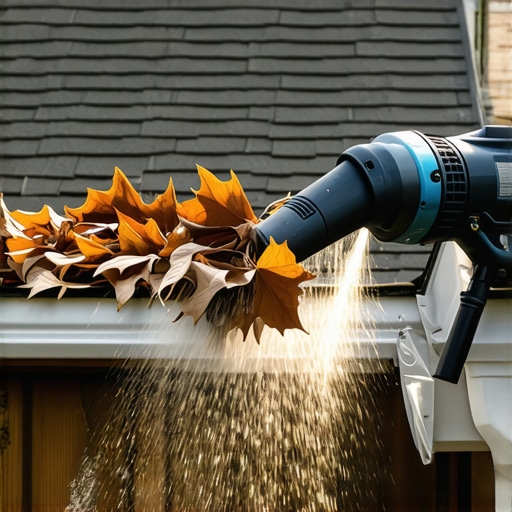
The Myth of the 10-Minute Clean: A Professional Reality Check
I recently stood on a ladder at a property surrounded by ancient oaks where the homeowner was beaming with pride. He had just finished using one of those curved leaf blower attachments, boasting that his seasonal gutter cleaning was done in under ten minutes. I climbed up, reached into the miter corner, and pulled out a three-pound brick of compressed shingle grit and decomposed pine needles that his blower had simply skipped over. This is the reality of water management. While a blower attachment is a fantastic tool for dry, loose debris, it often creates a false sense of security while the real enemies: organic sludge and internal clogs: remain hidden. As a specialist with over two decades in the field, I look at gutters as a hydraulic system. If you ignore the physics of flow, your aluminum gutter installation will fail long before its time. Water is a patient destroyer. It wants to find the fascia, it wants to rot the soffit, and eventually, it wants to undermine your foundation through hydrostatic pressure.
“Downspouts shall be sized based on the rainfall intensity of the region and the roof surface area.” : International Plumbing Code, Section 1106
The Physics of Air vs. The Weight of Wet Debris
Why do these blower attachments often leave behind the most dangerous clogs? It comes down to surface tension and the density of the debris. In a forested environment, leaves don’t just sit there. They decompose into a slick, acidic paste that sticks to the bottom of the trough. A leaf blower provides high-velocity air, but air is less dense than the water-logged organic matting found in a neglected system. To truly achieve a maintenance-free gutter system, you must understand that air can only move what it can get under. If you have a half-round gutter installation, the curved profile helps the air circulate better than a standard K-style, but the leader (the downspout) remains the primary failure point. If the blower pushes a mass of debris into the elbow, you have effectively created a structural plug that will cause the gutter to overflow during the next heavy rain, regardless of how clean the rest of the run looks. This is why a drone gutter inspection has become such a vital part of modern gutter replacement services: it allows us to see the internal state of the elbow without the guesswork.
The Critical Role of Pitch and Hanger Spacing
No tool, no matter how fast, can fix a pitch issue. A standard rule of thumb is a 1/4 inch of slope for every 10 feet of run. If your house has settled or the original installer used spikes and ferrules, which I despise because they inevitably pull out of the wood, your gutters are likely sagging. Standing water is heavy. A gallon of water weighs about 8.34 pounds. If you have a 50-foot run of 6-inch gutter that is half-full of water because it isn’t sloped correctly, you are hanging hundreds of pounds of dead weight on your fascia. This is where lifetime gutter guarantees often fail the fine print. They guarantee the material, not the installation physics. When we perform a professional aluminum gutter installation, we use heavy-duty hidden hangers spaced every 12 to 16 inches, especially in regions with heavy snow or dense tree canopies. This prevents the trough from twisting under the weight of wet leaves or ice. In colder climates, we also recommend heated gutter cables to prevent the expansion of ice from splitting the end cap or the miter seams.
“Gutters and downspouts shall be maintained in good repair and free from obstructions.” : International Property Maintenance Code, Section 304.7
Birds, Pests, and Protection Systems
It isn’t just leaves that cause the 10-minute job to fail. I once found a defunct squirrel nest that had been reinforced with plastic scraps, completely blocking a 3×4 leader. This is where bird spike gutter protection and high-quality guards come into play. However, you must match the guard to the debris. A micro-mesh guard is excellent for pine needles but can be blinded by heavy pollen or maple seeds, causing water to overshoot the gutter entirely. Conversely, a solid surface-tension “helmet” style works well in heavy rain but can become a landing strip for birds without bird spike gutter protection. For those seeking aesthetic excellence, copper patina finishes offer a stunning look, but they require expert soldering of every miter and end cap to ensure the system remains seamless in its function. A leaf blower attachment is a supplement to, not a replacement for, a total drainage strategy. If you aren’t checking the splash block or the pop-up emitter at the end of the line, you are only doing half the job. Water needs to be moved away from the house, not just out of the gutter.