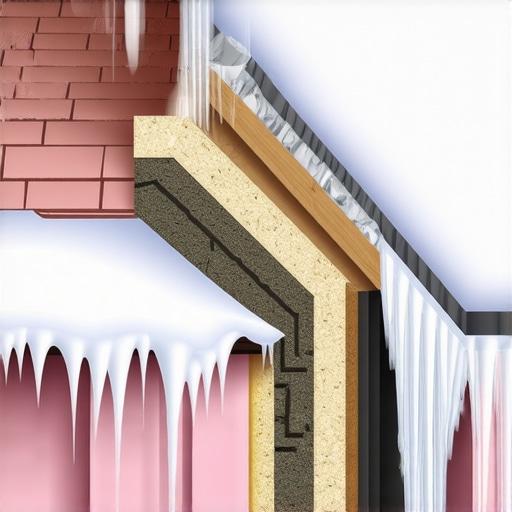
You wake up in the middle of a freezing January night and hear a rhythmic thumping. You think it is the wind, but it is actually the sound of your home being slowly dismantled. That sound is water from melting snow reaching your eaves, refreezing, and expanding with enough force to shear steel. Most homeowners think ice dams are a roofing problem or a gutter problem. As a specialist with 25 years in the trenches, I can tell you they are actually a thermal management problem. When your attic insulation fails, your gutters are the first to pay the price. I have spent decades repairing the aftermath of these failures, and the physics of it are as unforgiving as the cold itself.
The Anatomy of a Thermal Failure
In the winter of 2021, I was called out to a property where a 50-foot run of seamless aluminum gutters had literally exploded off the fascia. The homeowner was baffled because the gutters were only two years old. When I climbed the ladder, the issue was clear. This was not a product failure; it was a physics failure. The attic lacked sufficient baffles, and the insulation had been compressed near the eaves. This created a hot spot on the roof deck. As the snow melted over the warm attic space, it flowed down to the cold eave, which sat over the unheated soffit. There, the water flash-froze. Over three days of a deep freeze, that ice built up until it weighed over 1,500 pounds. The hangers, spaced at a standard 24 inches, simply could not hold the load. The metal twisted, the wood rot in the fascia was exposed, and the entire system came crashing down.
“Downspouts shall be sized based on the rainfall intensity of the region and the roof surface area.” – International Plumbing Code, Section 1106
Hydro-zooming into the process reveals a destructive cycle. When water transitions from a liquid to a solid state, it expands by approximately nine percent. In a confined space like a gutter or a leader, this expansion exerts thousands of pounds of pressure per square inch. This is why gutter sealant application is so critical; if there is even a hairline fracture in the seal of an end cap or a miter, the ice will find it, expand within it, and rip the joint apart. This is particularly problematic for those considering bamboo gutter alternatives in northern climates. While sustainable, bamboo lacks the tensile strength to survive the lateral expansion of a solid ice core. In these zones, we must rely on heavy-gauge aluminum or copper, often utilizing expansion joint gutters to allow the metal to move without buckling under extreme temperature shifts.
The Insulation Connection: R-Value and Eave Integrity
To understand why your attic insulation is the key, you have to look at the R-value. Insulation is designed to resist heat flow. In many northern regions, building codes now suggest R-49 to R-60. If you have old fiberglass batts that have settled, you likely have R-19 or worse. Heat leaks through the ceiling, warms the roof deck, and starts the melt. This is exacerbated if your two-story gutter services technician notices that your soffit vents are blocked by insulation. Without airflow from the soffit to the ridge vent, the roof deck stays warm, and the ice dam grows thicker every hour. This is where integrated home automation can actually save a home. Modern sensors can detect when the temperature at the eave is significantly lower than the roof deck, triggering heat cables or sending an alert to your phone before the weight becomes critical.
The Mechanics of Water Management
Proper drainage is about more than just a horizontal trough. It is a system of leader box gutters, elbows, and downspouts designed to move mass quickly. When we perform a downspout relocation, we are often trying to move the exit point away from a corner where ice naturally accumulates. We also look at the condition of the downspouts themselves. If you have been putting off a corrugated downspout repair, you are inviting disaster. Corrugated pipes have ridges that catch debris and provide a perfect surface for ice to grip. Once a downspout freezes solid, the water has nowhere to go but over the sides of the gutter, creating those massive icicles that pull on your fascia and soffit.
“The designer should consider the effects of snow and ice on the gutter system, particularly the weight of the ice and the potential for sliding snow from the roof.” – SMACNA Architectural Sheet Metal Manual
During a heavy snow event, the weight load is the primary enemy. In my years of experience, I have seen standard spikes and ferrules pull out like teeth from a comb. We use heavy-duty screw-in hangers, often spaced every 12 inches in high-load areas. This creates a structural bond between the gutter and the rafters. For homeowners who want to monitor their systems without climbing a ladder, an overflow alarm installation can provide peace of mind. These sensors sit inside the gutter and trigger if water or ice reaches a certain height, indicating a blockage that needs immediate attention. If you are doing your own maintenance, telescopic gutter tools allow you to clear the initial slush before it turns into a solid block of ice, but they are no substitute for professional two-story gutter services when the situation becomes dangerous.
The Long-Term Solution
Stopping ice dams requires a two-pronged attack: fixing the thermal bypasses in your attic and ensuring your gutter system is engineered for the load. This means sealing air leaks around chimney chases, light fixtures, and attic hatches. Once the heat stays in the house, the roof stays cold, and the snow stays as snow. For the water that does melt during the day, a properly pitched gutter is essential. We aim for a pitch of at least 1/4 inch per 10 feet of run. If the gutter is level, water sits, freezes, and starts the damming process. By combining high-performance insulation with a robust drainage system, you protect your foundation and your bank account from the expensive reality of winter water damage. Remember, water is the only force that can move a mountain; don’t let it move your house.