The Engineering of Water Management: Why Seams Fail
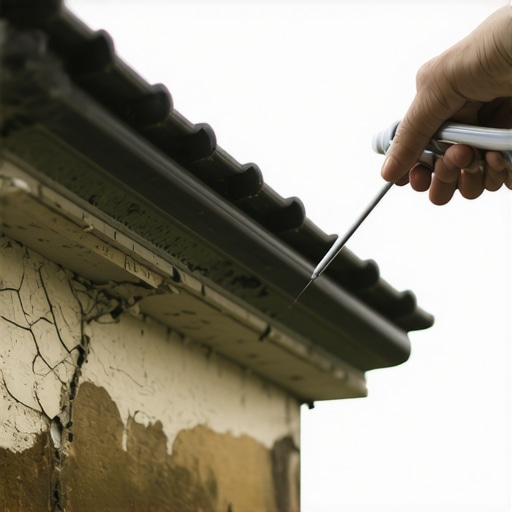
I stood on a ladder in a coastal Georgia town last summer, looking at a foundation crack wide enough to swallow a smartphone. The homeowner was baffled. They had a beautiful brick estate, but the corner of the house was sinking. The culprit was not a lack of maintenance but a failed miter joint on the upper gutter run. For three years, that single leaking seam had allowed thousands of gallons of water to bypass the leader and splash block, saturating the soil directly against the footer. This is why I am obsessed with the physics of the seam. Water is a patient destroyer. It uses surface tension to cling to the underside of your aluminum gutter installation, creeping back toward the fascia and soffit until it finds a way into your wall cavity. By the time you see a stain on the ceiling, the structural rot is already years in the making. In the world of industrial gutter services, we don’t just ‘caulk’ a leak; we engineer a seal that accounts for the thermal expansion and hydraulic pressure of a 2026 climate where ‘gully washers’ are becoming the norm.
“Gutters and downspouts shall be designed and installed to prevent water from entering the building envelope.” : International Building Code, Section 1503.2
The Physics of the Leak: Hydro-Zooming into the Joint
When we talk about a leaking seam, we are talking about a failure of the sealant to maintain its bond during the extreme thermal cycles of the roof deck. A 40-foot run of aluminum can expand or contract by over half an inch between a freezing night and a direct-sun afternoon. If you used a cheap ‘hardware store’ silicone, it has likely already pulled away from the metal, creating a microscopic gap. During a heavy downpour, water velocity increases. As the water hits the end cap or the miter, it creates a small amount of hydrostatic pressure. If the seal is compromised, that pressure forces water through the gap. This is where hidden hanger systems become critical. If your hangers are spaced too far apart, the gutter will sag, causing water to pool at the seam. Standing water is the enemy of any sealant, as it allows organic acids from decaying leaves to eat away at the chemical bond. We need to ensure a proper pitch of at least 1/4 inch per 10 feet of run to keep that water moving toward the outlet pipe connection.
Tip 1: The Substrate De-oxidation and Cleaning Protocol
You cannot seal over old failures. I see guys all the time just ‘glopping’ new sealant over a cracked, grey bead of old butyl. That is a recipe for a callback. The first tip for 2026 is absolute substrate purity. You must remove every trace of the old sealant using a plastic scraper to avoid scratching the finish of your aluminum gutter installation. Once the bulk is gone, you need to address the oxidation. Aluminum develops a fine layer of aluminum oxide when exposed to air, which acts as a release agent for sealants. I use a high-grit abrasive pad followed by a denatured alcohol wipe. This ensures the sealant is bonding to the metal, not the dirt. If you are dealing with asbestos gutter handling, stop. Old transite or asbestos-cement gutters require specialized abatement because any sanding or scraping releases hazardous fibers. For modern systems, a clean surface is the only way to ensure the tri-polymer sealants used in high-end gutter replacement services actually bite into the surface.
Tip 2: Choosing Tri-Polymer Sealants over Silicone
In the southern heat, silicone is a failure point. It doesn’t handle the ‘shear’ forces of expanding metal well. The second tip is to switch to high-performance tri-polymer or self-leveling gutter sealants. These formulas are designed to remain flexible even in sub-zero temperatures and offer superior UV resistance. When applying, you want to focus on the ‘wet-on-wet’ technique for miters. If you are integrating with TPO roof gutter flashing, you need to ensure the sealant is chemically compatible with the thermoplastic membrane. A common mistake in industrial gutter services is using a petroleum-based sealant that can degrade the TPO. Instead, use a specialized polyether sealant. For tile roof gutter support systems, where the weight of the roof often leads to slight fascia compression, you need a sealant with at least 50 percent movement capability. This allows the joint to act as a miniature expansion joint, absorbing the house’s natural shifts without breaking the water-tight barrier.
“Expansion joints shall be provided in long runs of gutters to allow for thermal movement without straining the seams or fasteners.” : SMACNA Architectural Sheet Metal Manual
Tip 3: Mechanical Reinforcement and Hanger Alignment
The best sealant in the world will fail if the gutter is moving too much. My third tip is to reinforce the seam mechanically. Most leaks occur at the miter or the outlet pipe connection because these are the points of highest stress. When we perform gutter cleaning services, we often find that the ‘Spikes and Ferrules’ have pulled out, leaving the gutter to bounce in the wind. This vibration shears the sealant bond. You should replace old spikes with heavy-duty hidden hanger systems that use long-life screws. Place a hanger within six inches of every seam or miter. This ‘pins’ the joint in place, forcing the thermal expansion to occur at the ends of the run rather than at the delicate joint. If you are installing downspout extension services at the same time, ensure the weight of the extension isn’t pulling down on the gutter outlet. Use a wall bracket to support the leader so the gutter seam remains stress-free. This mechanical stability is what separates a 2-year fix from a 20-year solution.
The Drainage Hierarchy: Moving Water Away
Fixing the seam is only half the battle. If that water is just dumping at the base of the wall, you’ve solved the fascia rot but ignored the foundation. A proper system must transition from the gutter to the leader, and finally to a managed exit point. We see too many ‘splash blocks’ that have sunk into the mud, actually directing water back toward the crawlspace. In 2026, we recommend a closed-circuit drainage path. This involves a solid PVC downspout extension that leads to a pop-up emitter or a French drain system. For homeowners with heavy tree canopies, even the best-sealed gutters will fail if they are full of sludge. Regular gutter cleaning services are non-negotiable. If you have tile roofs, the weight of the debris combined with the weight of the wet tiles can actually bend the gutter brackets, opening up those seams you just worked so hard to seal. Keep the system light, keep the water moving, and keep the seams tight. That is how you win the war against the rain. It is about more than just a dry basement: it is about protecting the structural integrity of your largest investment. Don’t let a ten-dollar tube of cheap caulk be the reason your foundation fails. Use the right chemistry, the right mechanical support, and the right slope. Your home will thank you for it during the next tropical depression or heavy spring thaw.